.jpeg)
Waiting for hair fall to stop on its own is the single biggest mistake most people make. Many people wait, hoping it is temporary, only to realise later that the pattern has progressed. By the time thinning becomes visible, some follicles may have already miniaturised beyond recovery.
A 2025 survey of 245 Indian dermatologists revealed that 51.4% see androgenetic alopecia in 30-40% of their patients. That means pattern hair loss is not rare; it is the norm in Indian dermatology OPDs.
The problem? Hair loss has many faces: genetics, stress, anaemia, thyroid disorders, PCOS, or scalp inflammation. Each requires a different treatment path. The earlier a dermatologist identifies your type, the more options you keep alive.
If you live in or near Kandigai, Chennai, you have access to several clinics. But choosing the right one is not about who has the best Instagram page. It is about who diagnoses first and sells procedures second.
Key Takeaways
- Hair loss treatment in Kandigai should be based on cause, pattern, and follicle activity, not just visible thinning.
- Early evaluation helps determine whether treatments like PRP or GFC are likely to be effective, especially when follicles are still active.
- Clinics differ in how they assess hair loss, plan treatment, and adjust sessions over time, not just in the procedures they offer.
- Results depend on consistency, timely intervention, and how treatment is modified based on response.
- Clinics near Kandigai, including Velantis Dermatology, SKY Skin & Laser Clinic, Mahi Skin and Hair Care, Oliva Clinic, and Aura Skin & Hair Clinic, offer different consultation styles and treatment approaches, which can influence your overall experience.
4 Common Hair Loss Patterns and What They Mean for You

Before stepping into a clinic, the way your hair is thinning or shedding can offer useful early clues. While this doesn't replace a diagnosis, it can help you understand whether your hair loss is likely to be progressive, temporary, or condition-driven, which in turn influences the kind of treatment approach you may need.
Pattern 1: Gradual Thinning Around the Parting or Crown
If your part is widening or the crown looks thinner over time, this is often linked to pattern hair loss. Hair follicles gradually weaken and produce finer strands. Treatment usually focuses on slowing progression and supporting existing follicles, especially if started early.
Pattern 2: Sudden Increase in Hair Shedding
Noticing more hair on your pillow or in the shower may point to temporary shedding triggered by stress, illness, or hormonal shifts. In most cases, follicles remain active, and the focus is on identifying the trigger and supporting recovery, rather than aggressive procedures.
Pattern 3: Well-Defined Patches of Hair Loss
Round or clearly defined bald patches may indicate a condition affecting the immune response. This type of hair loss requires medical evaluation and targeted treatment, as it does not follow the usual thinning pattern.
Pattern 4: Overall Reduction in Hair Volume
If your hair feels thinner overall without a clear pattern, it may be linked to nutritional or hormonal factors. Evaluation often goes beyond the scalp, with treatment depending on underlying causes rather than a single procedure.
Recognising these patterns early can help you approach treatment with more clarity. If a recommendation is made without understanding how your hair loss has developed, it may not fully address the underlying cause. A more effective approach usually begins with pattern recognition followed by targeted evaluation, rather than starting with a procedure.
If you are considering medical hair loss treatment, a consultation with an MD dermatologist, such as Dr Janani Sree C M, can help you understand whether this approach suits your hair loss pattern and stage.
5 Clinics Offering Hair Loss Treatment Near Kandigai, Chennai
If you are exploring hair loss treatment in Kandigai, most clinics are located across Tambaram, Medavakkam, and nearby areas within a short travel distance. While many clinics may offer similar treatments like PRP or GFC, the difference usually lies in how your hair loss is evaluated and how your treatment is planned over time.
1. Velantis Dermatology
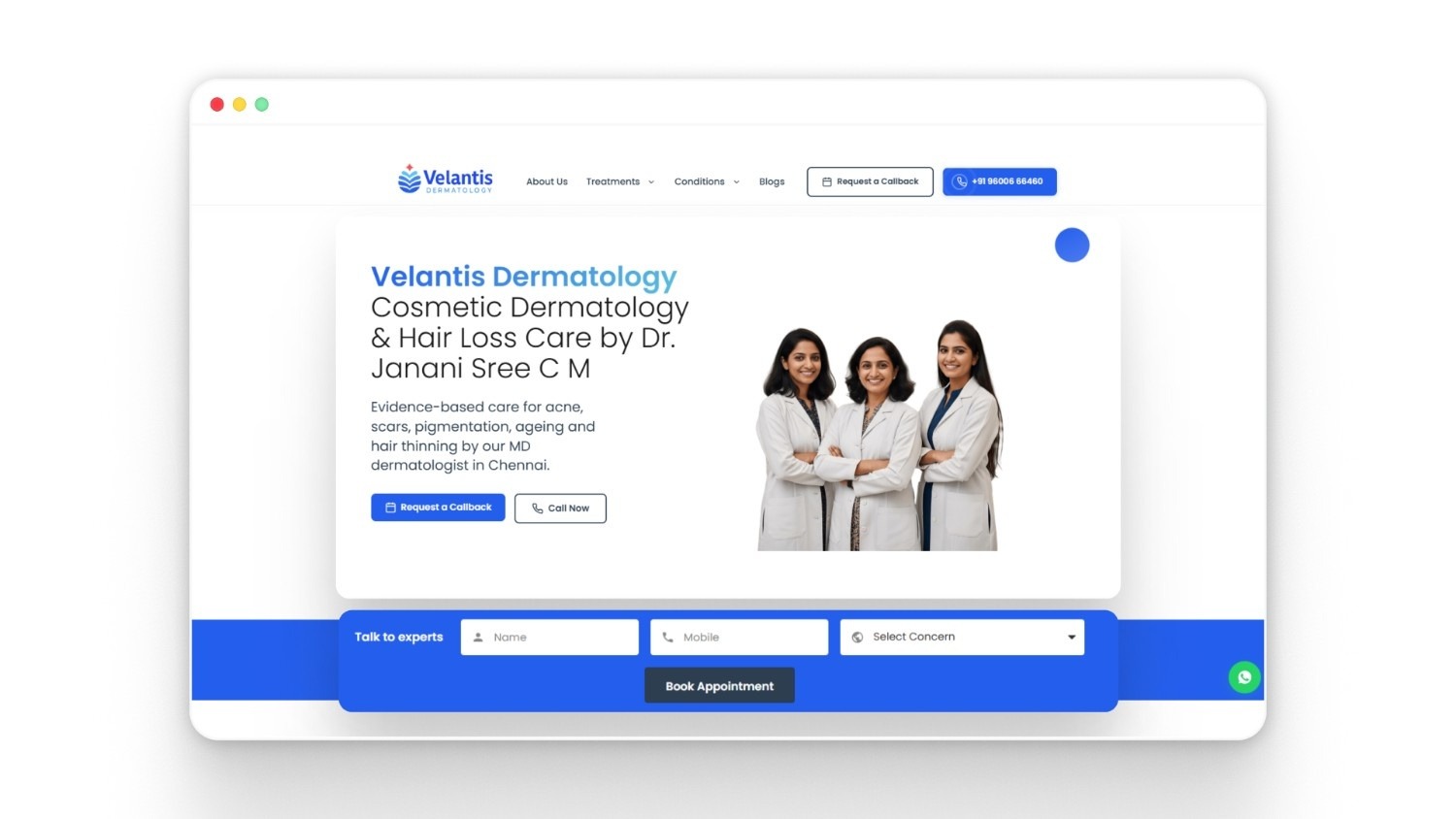
At Velantis Dermatology, your consultation focuses on identifying the cause and pattern of hair loss before any treatment is discussed. The evaluation looks at how your hair loss has progressed, including thinning patterns and scalp condition. FDA-approved systems are used where relevant to support controlled, clinically guided treatment.
Under the guidance of trusted MD dermatologist Dr Janani Sree C M, your hair loss is categorised into various types. The treatment is planned accordingly, rather than starting with a fixed procedure.
Key Differentiators for Velantis Dermatology
- Your hair loss is first classified into patterns such as progressive thinning, temporary shedding, or scalp-related causes.
- Your treatment plan is built as a step-wise process, rather than starting with procedures immediately.
- You may be guided on whether medical therapy, PRP, GFC, or a combination is appropriate.
Best suited for: If you want a diagnosis-first approach where treatment is based on cause, not assumption.
If you want to understand whether hair loss treatment is suitable for your skin profile, you must consider booking a consultation at Velantis Dermatology to discuss your concerns based on clinical evaluation.
2. SKY Skin & Laser Clinic
sourcelink
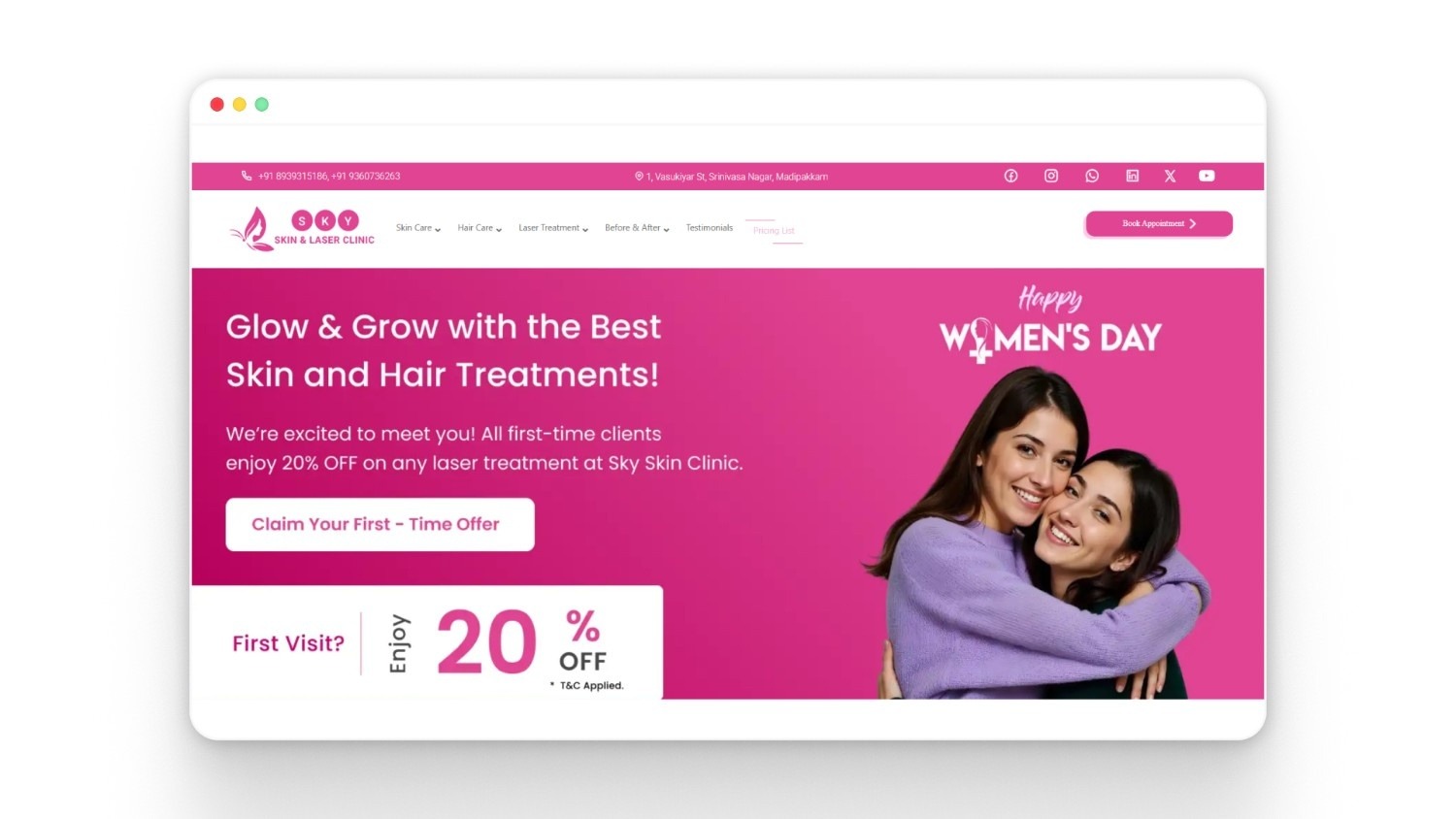
At SKY, your treatment is typically planned by aligning your hair and scalp condition with the most suitable procedure and device.
Key Differentiators for SKY Skin & Laser Clinic
- Your treatment is selected based on how your scalp and follicles are expected to respond, not just the availability of procedures.
- You may receive clarity on why a particular treatment (PRP, GFC, or others) is recommended.
- Your sessions are reviewed and adjusted within a structured but flexible framework.
- The focus is on matching treatment method to response rather than applying a uniform plan.
Best suited for: If you want a treatment approach that balances technology choice with your response over time.
3. Mahi Skin and Hair Care

sourcelink
Mahi Skin and Hair Care offers a more locally accessible setup, where treatment is typically planned with a focus on practicality and continuity.
Key Differentiators for Mahi Skin and Hair Care
- Your treatment is often planned with flexibility in session scheduling based on convenience and response.
- You may interact with a smaller, consistent care team across visits.
- The approach is generally less protocol-driven and more adaptable to your pace of treatment.
- Accessibility and continuity tend to be stronger compared to larger chain clinics.
Best suited for: If you prefer a local clinic with flexible scheduling and ongoing familiarity.
4. Oliva Clinic
sourcelink
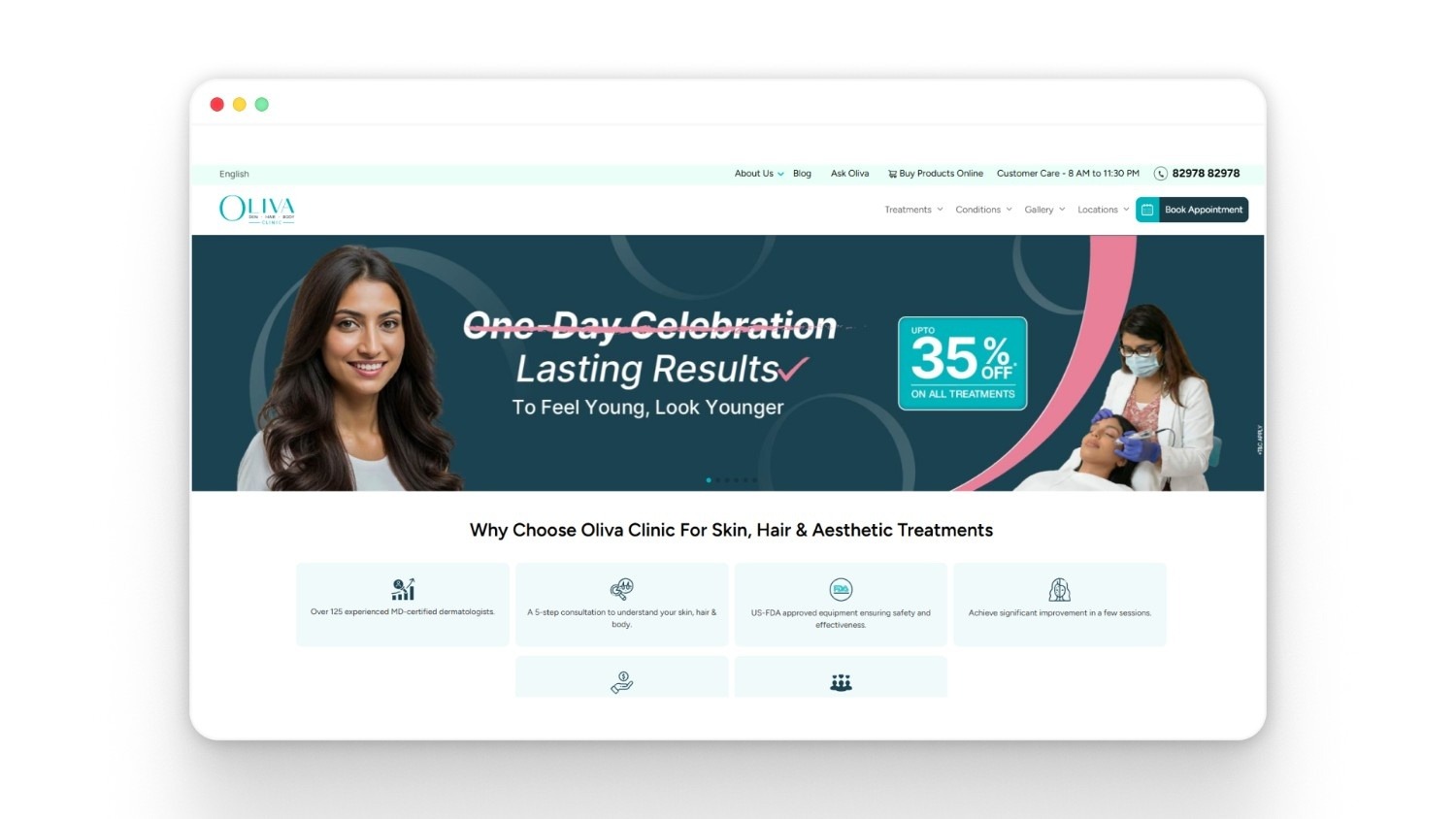
At Oliva, your treatment is usually mapped into a predefined structure, with sessions planned over a fixed timeline once your condition is assessed.
Key Differentiators for Oliva Clinic
- Your treatment follows a package-based model with defined session counts from the start.
- Sessions are delivered at standardised intervals for consistency.
- You receive clear upfront expectations on cost and duration.
- Flexibility may be limited if your response changes mid-course.
Best suited for: If you prefer predictability, structure, and clear timelines from the beginning.
5. Aura Skin & Hair Clinic
sourcelink
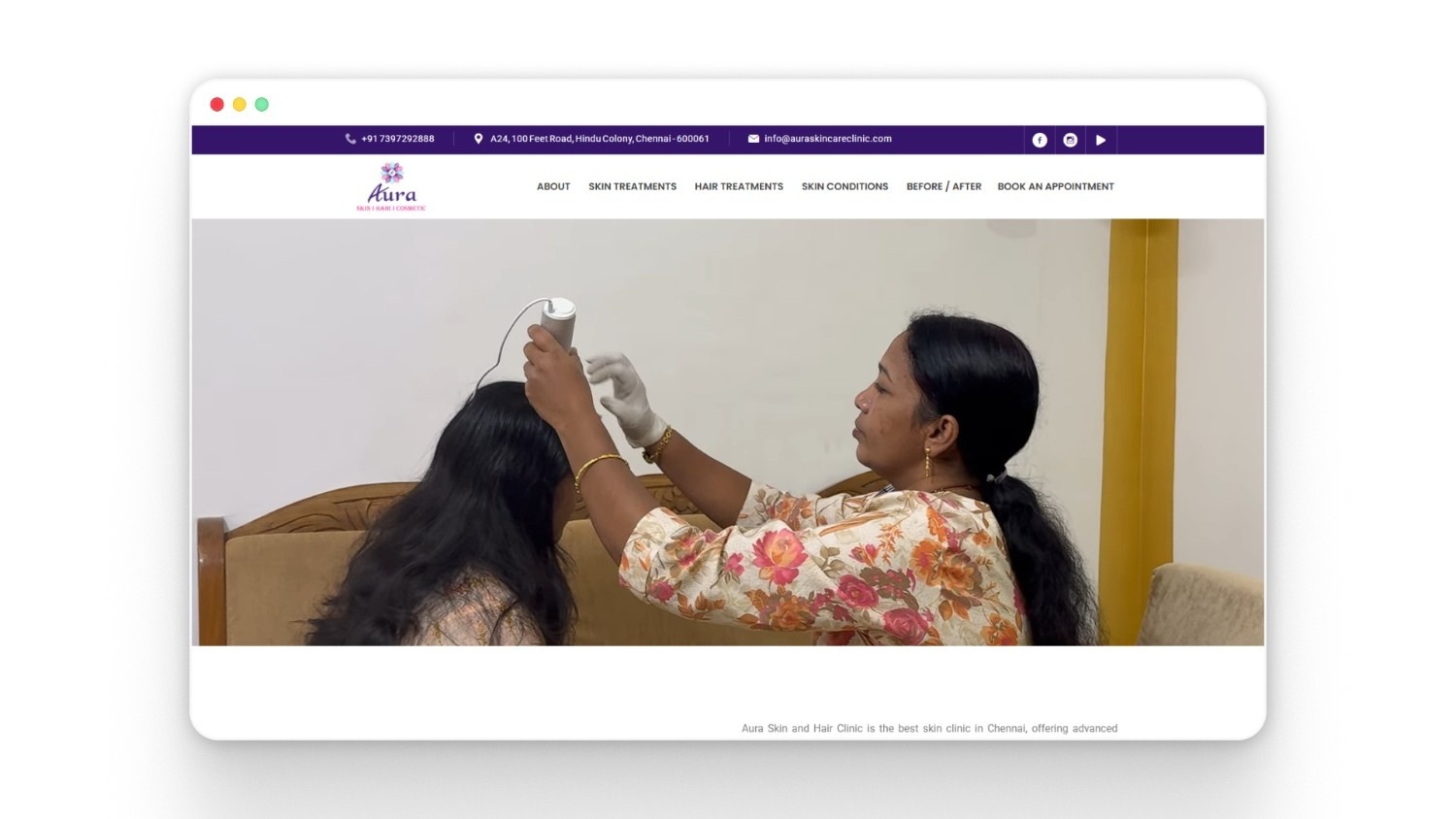
At Aura, hair loss treatment is often approached with a focus on visible improvement and overall scalp appearance, sometimes combined with other aesthetic goals.
Key Differentiators for Aura Skin & Hair Clinic
- Your consultation may consider how hair density and scalp appearance affect the overall look.
- Treatment may be planned as part of a combination-based approach rather than a standalone procedure.
- Sessions are adjusted based on visible changes and comfort levels.
- The focus is more on appearance outcomes alongside hair growth support.
Best suited for: If you are looking for a more aesthetic-oriented approach to hair loss treatment.
While clinics may differ in their approach, the real difference often lies in how your treatment is structured after evaluation. Understanding that process can help you see what happens beyond the consultation.
How a Dermatologist Actually Plans Your Hair Loss Treatment (Step by Step)
Most people think treatment = PRP. That is wrong. Here is what really happens inside a good clinic.

Step 1: Differentiate Between Active Hair Fall vs Empty Follicles
A dermatologist pulls gently (hair pull test) and looks at the roots under a microscope. If follicles are still producing hair, there is hope. If not, only transplant works.
Step 2: Rule Out Temporary Causes
Iron deficiency, hypothyroidism, and vitamin D deficiency can mimic genetic hair loss. Blood tests are non‑negotiable.
Step 3: Match Treatment to Pattern
- Patchy loss - steroids, not PRP.
- Sudden shedding - fix trigger, no lasers.
- Gradual crown thinning - minoxidil/finasteride + consider PRP/GFC.
Step 4: Set Realistic Expectations
Regrowth takes 4-6 months. You will see reduced shedding first, then tiny baby hairs, then thicker hair. Anyone promising "full density in 3 months" is lying.
PRP vs GFC for Hair Loss
Both Platelet-Rich Plasma (PRP) and Growth Factor Concentrate (GFC) come from your own blood, but they are designed for different levels of targeted stimulation.
A study in Dermatologic Surgery (Jan 2026) compared PRP and GFC head‑to‑head. GFC gave faster visible results, but PRP had better sustained improvement at 6 months. The authors suggested starting with GFC for rapid response, then switching to PRP for maintenance.
Hair Loss Treatment Cost Near Kandigai, Chennai
Prices vary by clinic tier. Here is an approximate range based on 2026 data from clinics serving the Kandigai and nearby areas.
Note: These are indicative. Many clinics bundle 6 PRP sessions for ₹25,000-₹30,000. Always ask if GST (18%) is extra.
Also Read: Costs and Results of Laser Treatment for Pigmentation in Chennai
Understanding the Timeline Before You Commit
While many treatments are described in terms of sessions, what matters more is how those sessions are spaced and reviewed over time. A realistic timeline is often built around consistency and response, not speed.
Note: Medical therapy such as Minoxidil or Finasteride is usually continued daily to help stabilise ongoing hair loss. Procedures like PRP or GFC act as supportive boosters, not replacements, and are typically added to improve how existing follicles respond over time.
Knowing how long treatment may take is only one part of the decision. What matters just as much is how that plan is explained and justified, which is where asking the right questions becomes important.
7 Questions You Must Ask Before Signing Up
A treatment plan may look straightforward on paper, but the details behind it matter. These questions can help you evaluate whether your plan is suited to your hair loss pattern.
Also Read: GFC Hair Treatment Price in Chennai: Complete Cost Guide (2026)
Conclusion
Hair loss treatment tends to be more effective when it is viewed as a clinical decision rather than a quick solution. Factors such as the type of hair loss, how long it has been progressing, and whether the follicles are still active play an important role in determining which treatments may be useful. Understanding how these decisions are made, and how different clinics approach them can help you move forward with clearer expectations instead of assumptions.
If you are exploring hair loss treatment Near Kandigai, it may help to focus on clinics that emphasise accurate diagnosis, transparent discussions, and structured follow-up care. This kind of approach often leads to more realistic timelines and reduces the likelihood of unnecessary or mismatched treatments.
If you want to understand which medical options may be suitable for your specific hair loss pattern, you may consider consulting Velantis Dermatology with Dr Janani Sree C M, where treatment decisions are guided by clinical evaluation rather than assumption.
FAQs
1. How do you know if your hair follicles are still active?
A dermatologist may assess this through scalp examination and sometimes dermoscopy. Visible thinning with finer hair often indicates follicles are still active but weakening.
2. Can PRP or GFC regrow hair on completely bald areas?
These treatments are more effective when follicles are still present. Completely inactive or scarred follicles usually do not respond to stimulation.
3. Why do some people not see results even after multiple sessions?
This can happen if the underlying cause is not addressed or if follicles are already significantly miniaturised. Treatment selection and timing play a key role.
4. Can nutritional deficiencies affect treatment outcomes?
Yes, low levels of iron, vitamin D, or B12 can reduce how well your hair responds, even if you are undergoing PRP or GFC.
5. Is it necessary to combine medical therapy with procedures?
In many cases, yes. Procedures like PRP or GFC support follicles, but medications help stabilise ongoing hair loss.
6. How soon can you expect visible improvement after starting treatment?
Initial changes may take a few weeks to months, depending on your hair cycle. Visible density improvement usually develops gradually over multiple sessions.
7. Can stress-related hair loss recover without procedures?
In some cases, yes. If the trigger is temporary, hair may regrow once the underlying issue is resolved, though support treatments may help speed recovery.
8. Why is scalp condition important before starting treatment?
Issues like dandruff or inflammation can affect treatment effectiveness and may need to be managed first.
9. Can you switch between PRP and GFC during treatment?
Yes, depending on how your hair responds. Some treatment plans evolve from PRP to GFC or vice versa based on progress.
10. What indicates that your treatment plan needs to be changed?
Continued hair fall, lack of density improvement, or increased scalp sensitivity may indicate that your plan needs reassessment.

.png)

.jpg)
.jpg)