.jpg)
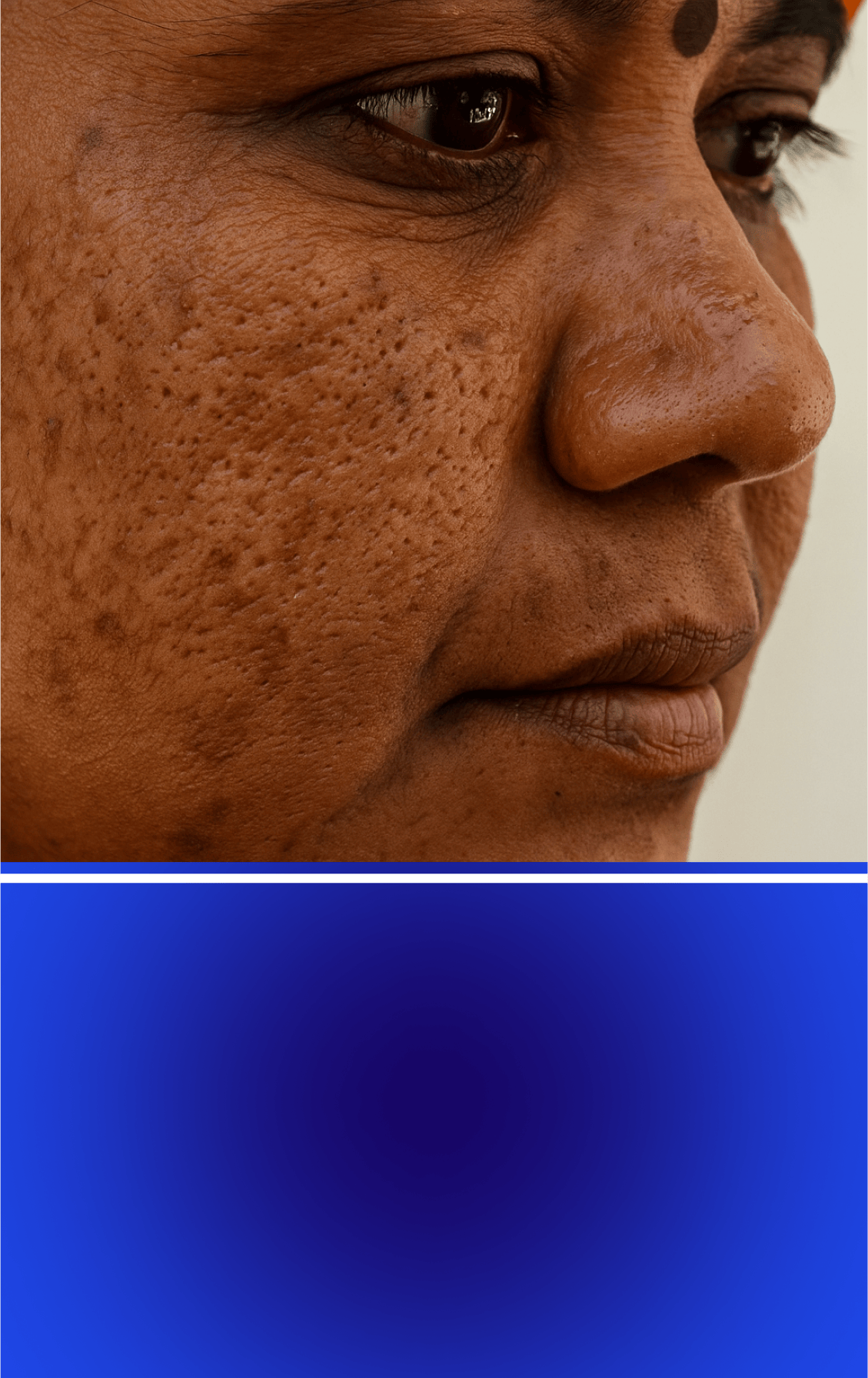
Managing pigmentation on your own can often feel like a slow cycle of trial and disappointment. Creams may help for a while, and home remedies might show mild improvement, but the pigmentation often returns or never fully clears.
Waiting for it to fade on its own is one of the most common reasons people delay effective treatment. By the time dark patches, tanning, or uneven tone become more noticeable, the pigmentation may already have settled into deeper layers of the skin, making it harder to treat with surface-level solutions.
This is especially relevant in India, where most individuals fall under Fitzpatrick skin types IV–V, which are more prone to pigmentation and can react differently to treatment if not handled carefully.
If you are exploring laser skin lightening treatment in Pallikaranai, the next step is to focus on clinics that properly assess your skin and tailor treatment to your pigmentation type and depth.
Key Takeaways
- Laser skin lightening in Pallikaranai is offered by clinics like Velantis Dermatology, SKY Skin & Laser Clinic, Oliva Clinic, Aura Skin & Hair Clinic, and Sai Skin Clinic.
- Suitability depends on pigmentation type, depth, and skin tone, not just visible darkness.
- Clinics differ in evaluation quality, laser choice, and how cautiously treatment is delivered.
- Results depend on gradual sessions, sun protection, and response-based adjustments over time.
- A laser is not always the starting point. Active skin conditions, hormonal pigmentation, or sensitive skin may need medical management or stabilisation before laser can be used safely and effectively.
What Laser Skin Lightening Does Beneath the Surface
Laser skin lightening works by delivering specific wavelengths of laser energy that are selectively absorbed by melanin pigment. This absorption breaks the pigment into smaller particles, which are then removed by the body's lymphatic system over time.
What makes results vary is not just the technology, but how your skin responds to that energy. Factors such as pigment depth, skin sensitivity, and how precisely the laser is applied can influence both the speed and safety of improvement.
This is also why treatments are usually spaced out. Each session builds on the previous one, allowing your skin to recover and respond before the next adjustment is made.
Note: Not all lasers used for pigmentation work the same way. Some are designed to target deeper pigment, while others focus on surface-level tone and texture. The choice of laser and settings plays a key role in both safety and results, especially for Indian skin types.
Top 5 Laser Skin Lightening Clinics Near Pallikaranai, Chennai (2026)
If you are exploring laser skin lightening treatment in Pallikaranai, most clinics are located across Medavakkam, Velachery, and nearby areas. While many offer similar procedures, what differs is how your pigmentation is assessed, which laser platforms are used, and how cautiously sessions are delivered for your skin type.
1. Velantis Dermatology
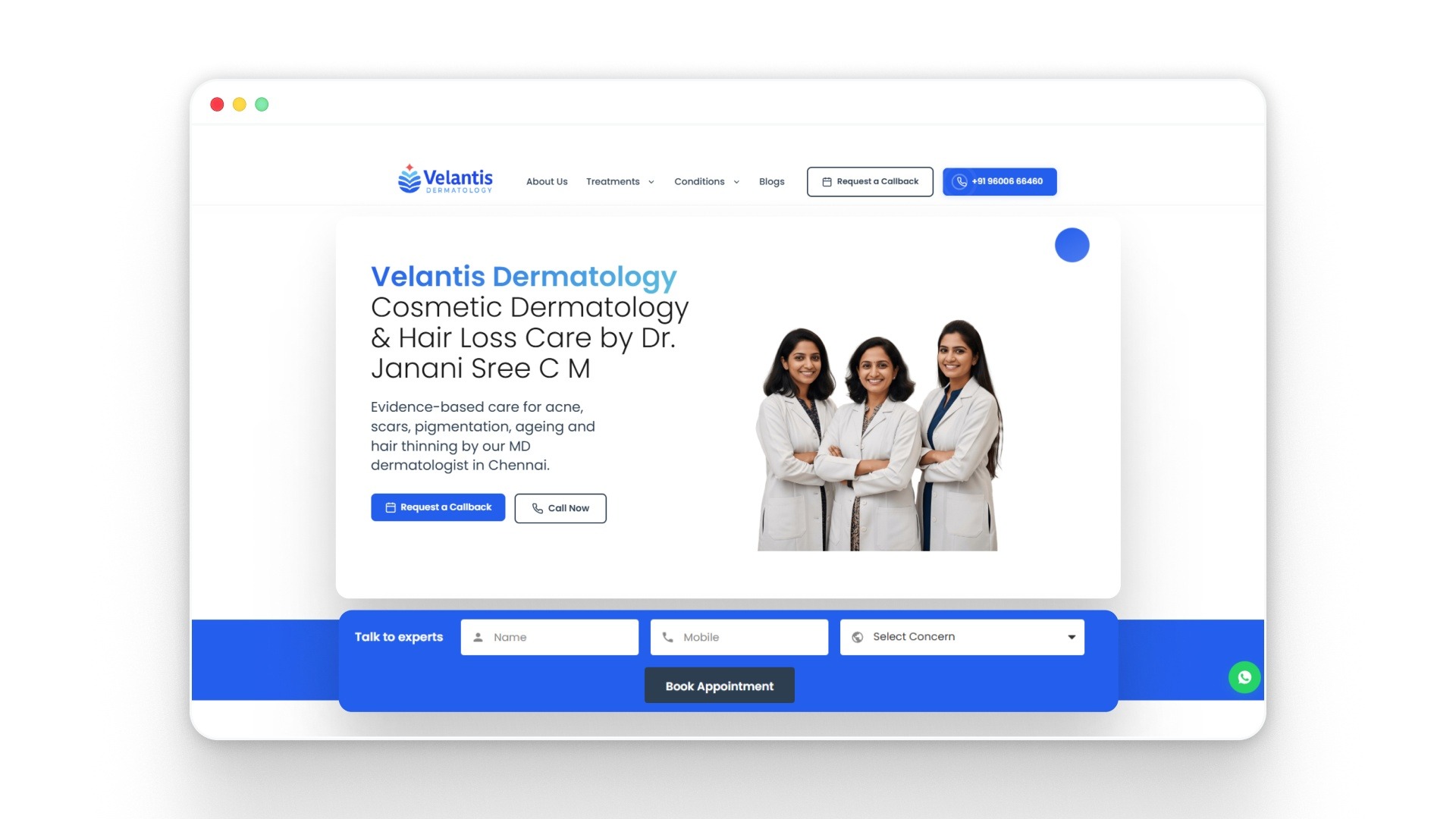
At Velantis Dermatology, your treatment is approached as a clinical process, where pigmentation is assessed in terms of depth, distribution, and triggers before selecting a laser. The clinic uses FDA-approved laser systems (commonly including Q-switched and other pigment-targeting platforms), with settings adjusted conservatively for Indian skin.
Key Differentiators
- Care is guided under the trusted dermatologist, Dr Janani Sree C M, with emphasis on long-term stability over quick results.
- Your pigmentation is classified as superficial, mixed, or deeper, rather than treated uniformly.
- Laser selection is based on pigment depth and skin sensitivity, not a one-device approach.
- Sessions are gradually adjusted based on response, reducing the risk of rebound pigmentation.
Best suited for: If you prefer a cautious, medically guided approach with controlled laser delivery.
To understand whether skin brightening treatment suits your skin, you may consider booking a consultation with a trusted MD dermatologist at Velantis Dermatology.
2. SKY Skin & Laser Clinic

At SKY Skin & Laser Clinic, your treatment is typically planned by matching your pigmentation type with the appropriate laser technology. This often involves platforms such as Q-switched or advanced pigment lasers, depending on suitability.
Key Differentiators
- Your treatment is aligned with specific laser platforms suited to your skin and pigment type.
- You are guided on why a particular device is selected for your case.
- Sessions are delivered in a structured but adjustable format based on response.
- Emphasis is placed on technical accuracy in laser selection and application.
Best suited for: If you want clarity on which laser is being used and why it suits your skin.
3. Oliva Clinic
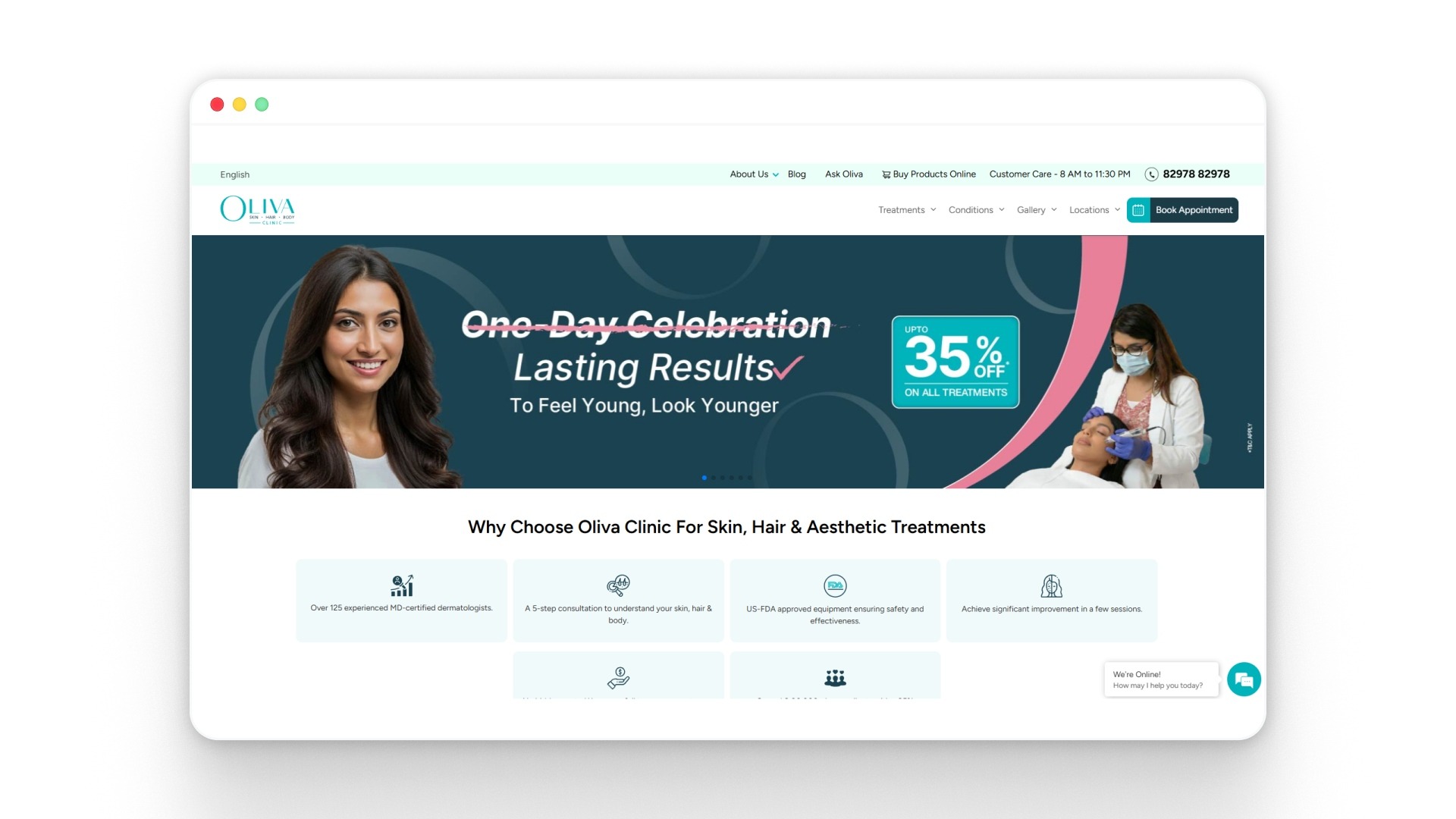
At Oliva Clinic, your treatment is delivered through a protocol-driven model. They use medical-grade laser systems (commonly including Q-switched Nd: YAG platforms) across their centres, with predefined session structures.
Key Differentiators
- Your treatment follows a package-based plan with fixed sessions and timelines.
- Laser use is standardised across visits for consistency.
- You receive clear expectations on cost and duration upfront.
- Flexibility may be limited if your skin response varies during treatment.
Best suited for: If you prefer a structured, predictable treatment plan with consistent delivery.
4. Aura Skin & Hair Clinic
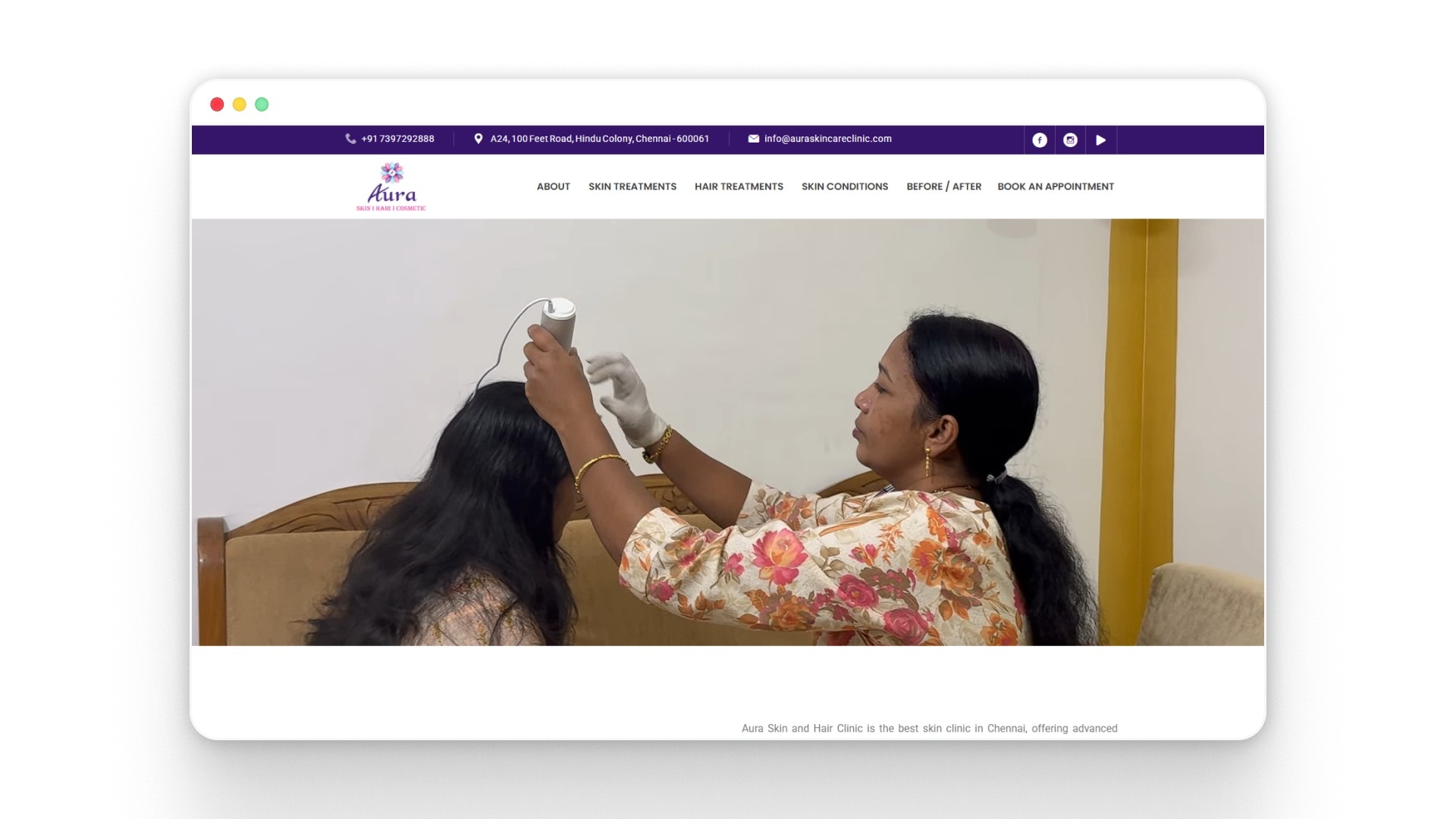
At Aura Skin & Hair Clinic, laser skin lightening is often positioned as part of a broader aesthetic plan. It uses pigment-targeting laser systems alongside complementary treatments to improve overall skin appearance.
Key Differentiators
- Your consultation includes appearance-focused goals beyond pigmentation alone.
- Laser may be combined with other skin treatments for visible improvement.
- Sessions are adjusted based on cosmetic outcomes and comfort levels.
- The approach prioritises visible brightness and skin finish.
Best suited for: If you are looking for a cosmetic, result-oriented approach with combination treatments.
5. Sia Skin Clinic

At Sia Skin Clinic, treatment is typically delivered using commonly available pigment lasers (such as Q-switched platforms). It focuses on gradual improvement through regular, manageable sessions.
Key Differentiators
- Your sessions are paced based on visible progress and skin tolerance.
- Treatment planning is flexible rather than protocol-heavy.
- You may experience continuity with the same care provider across visits.
- Accessibility and convenience support consistent follow-up.
Best suited for: If you prefer a nearby, practical option with steady, gradual improvement.
While clinics may differ in how they deliver treatment, the bigger question is whether laser is the right approach for your pigmentation right now. Certain conditions may require a different starting point.
Also Check: Best Chemical Peels for Pigmentation Treatment.
When Laser Skin Lightening May Not Be the Right First Step
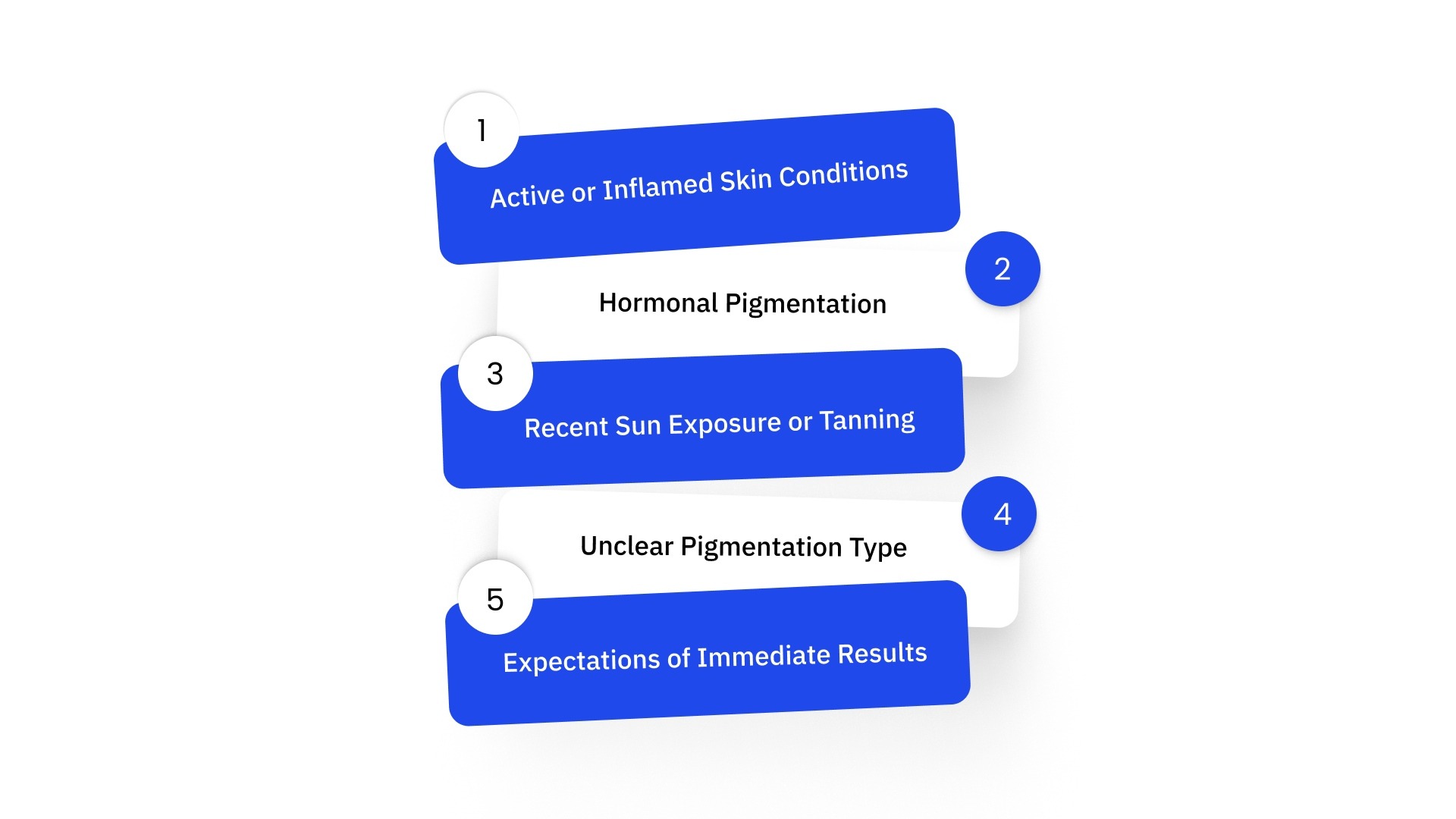
While laser treatment can be effective for many types of pigmentation, there are situations where starting with laser may not give the best results. In some cases, addressing the underlying condition first can improve both safety and outcomes.
1. Active or Inflamed Skin Conditions
If your skin has ongoing irritation, such as acne, redness, or inflammation, laser treatment may increase sensitivity and lead to uneven results. Stabilising the skin first usually allows for a more controlled response.
2. Hormonal Pigmentation (Melasma) Without Control
Conditions like melasma are often influenced by hormonal factors. If these triggers are not managed, laser treatment alone may lead to temporary improvement followed by recurrence. A combined approach is usually more effective.
3. Recent Sun Exposure or Tanning
Fresh tanning increases melanin activity, which can make your skin more reactive to laser energy. Starting treatment without allowing the skin to settle may increase the risk of irritation or post-inflammatory pigmentation.
4. Unclear Pigmentation Type
If the depth or cause of pigmentation is not clearly identified, treatment may be less effective. Superficial and deeper pigmentation respond differently, so evaluation plays a key role before starting.
5. Expectations of Immediate Results
Laser skin lightening is usually a gradual process. If the expectation is a quick or dramatic change in one or two sessions, it may lead to disappointment or overtreatment.
Note: Laser treatment tends to work best when your skin is properly assessed, stable, and suited for energy-based procedures. In some cases, preparing your skin first can make the treatment more predictable and reduce the chances of complications.
How to Compare Clinics Without Relying on Surface Factors
After exploring different clinics, focus on how your treatment will be planned, not just proximity. Pigmentation does not respond uniformly, so the quality of evaluation often influences both safety and outcomes.
When you compare clinics, what matters is not just what is offered, but how decisions are explained and adapted to your skin.
- Whether your pigmentation is clearly classified before recommending treatment.
- Whether the clinic explains why laser is suitable, or when it may not be the first step.
- Whether treatment is described as gradual and adjustable, not fixed.
- Whether expectations are set around improvement rather than instant change.
- Whether follow-up is positioned as part of the process, it is not optional.
Focusing on these aspects helps you move beyond surface comparisons and understand how your treatment is likely to be handled over time.
How to Assess a Laser Skin Lightening Consultation
A consultation is where your treatment plan begins to take shape. Beyond general explanations, this is the point where your pigmentation is assessed, and decisions are made about whether laser treatment is suitable, how it will be delivered, and what results you can realistically expect.
With a clearer understanding of what to look for during consultation, you can now approach the number of sessions with a better perspective.
Note: Clinical tools like the Dermatology Life Quality Index (DLQI) show that pigmentation affecting deeper skin layers can meaningfully impact quality of life, which is why early and appropriate treatment planning matters.
How Many Sessions Are Usually Needed for Laser Skin Lightening?
Laser skin lightening is typically planned over multiple sessions rather than a one-time procedure. Since pigmentation develops gradually, treatment is also designed to improve skin tone step by step while minimising the risk of irritation or uneven results.
Most treatments require 4-8 sessions or more, depending on depth and response. What matters more than the number:
- Consistency.
- Sun protection.
- Adjustment based on skin response.
In most cases, treatments are scheduled a few weeks apart so the skin has time to heal and respond between sessions. The total number of sessions can vary based on the type of pigmentation, your skin's sensitivity, and how it reacts to the initial treatments, which can thus impact the cost.
Cost of Laser Skin Lightening in Pallikaranai
The cost of laser skin lightening is usually not a fixed number, because it depends on how your treatment is planned rather than just the procedure itself. Factors such as the type of pigmentation, the number of sessions required, and the laser technology used can all influence the overall cost.
Note: Most clinics near Pallikaranai require a consultation before quoting, which might cost around ₹300-₹600 for an initial assessment. Prices are indicative and may vary between clinics. A consultation is usually required to estimate the total cost based on your skin concern.
Also Read: GFC Hair Treatment Price in Chennai: Complete Cost Guide (2026)
Conclusion
Laser skin lightening treatment in Pallikaranai is not just about choosing a clinic; it's about understanding how your pigmentation is assessed and treated over time. The same technology can produce very different outcomes depending on how cautiously and consistently it is used.
If you focus on diagnosis, gradual planning, and realistic timelines, you are more likely to see stable, long-term improvement rather than short-term changes.
Still having doubts about how to select a skin brightening treatment clinic? Booking a consultation with a trusted MD Dermatologist, Dr Janani Sree C M, would help.
FAQs
1. How do I know if my pigmentation is suitable for laser treatment or needs a different approach?
Not all pigmentation responds the same way. Superficial tanning or mild spots may improve with topical care, but deeper conditions like melasma or dermal pigmentation often require laser or combination treatments. A consultation helps determine the depth and trigger before choosing the right approach.
2. Why does pigmentation sometimes return even after laser treatment?
Laser breaks down existing pigment, but it does not always address the underlying cause. Factors like sun exposure, hormones, or inflammation can trigger recurrence, which is why maintenance care and sun protection are essential.
3. Can laser treatment make pigmentation worse if not done correctly?
Yes, especially in Indian skin types (IV–V). Incorrect laser settings or aggressive treatment can trigger post-inflammatory hyperpigmentation, which is why proper assessment and conservative settings are important.
4. How many sessions are usually required before visible improvement?
Most people begin noticing changes after a few sessions, with visible improvement often starting around 3-4 weeks after treatment as the body clears fragmented pigment.
The total number of sessions varies depending on pigmentation depth and response.
5. What type of laser is commonly used for pigmentation in Indian skin?
Lasers like Q-switched Nd: YAG are commonly used because they can target both superficial and deeper pigmentation while being safer for darker skin tones when used correctly.
6. Is laser skin lightening only for the face, or can it treat other areas?
It can be used on multiple areas, including the face, neck, underarms, and even areas like the back or around the mouth, depending on the type of pigmentation and skin sensitivity.
7. What should I expect immediately after a laser session?
Pigmented areas may temporarily appear darker before they begin to lighten. Mild redness or sensitivity can occur, and proper aftercare is important to support healing and avoid complications.
8. Can all types of pigmentation be completely removed with a laser?
Not always. Conditions like post-inflammatory pigmentation may clear well, but chronic conditions such as melasma can improve significantly but may not be permanently cured and often require maintenance.
9. Is laser skin lightening safer than using skin-lightening creams?
Laser treatments, when done under a dermatologist, target pigment more precisely. In contrast, unsupervised use of certain creams may carry risks if they contain strong or inappropriate ingredients, making professional guidance important.
10. How soon can I resume my normal skincare routine after laser skin lightening?
Most people can return to a basic skincare routine within a few days, but active ingredients like retinoids, exfoliating acids, or strong serums are usually paused for a short period. Your dermatologist will guide you based on how your skin responds after the session to avoid irritation or post-treatment pigmentation.

.png)
.jpg)
.jpg)