Smooth skin can be difficult to maintain when concerns like acne scars, uneven texture, or enlarged pores continue to return despite consistent skincare. What often starts as mild scarring or roughness can gradually become more noticeable, especially when deeper layers of the skin are involved.
According to the NLM database, acne is a common skin condition, and studies indicate that around 80% of acne scars are atrophic, meaning they form below the surface as ice-pick, boxcar, or rolling scars and affect adolescents. These types of scars typically do not respond fully to topical treatments alone, and we understand how frustrating it can be to deal with them.
CO2 laser treatment is often considered when surface-level solutions are no longer effective, but outcomes depend on how well the procedure is planned for your skin type, scar depth, and recovery tolerance.
If you are exploring CO2 laser treatment in East Tambaram, understanding how clinics assess your skin and customise treatment can help you make a more informed and safer decision.
Key Takeaways
- A fractional CO2 laser may be considered for acne scars that affect skin texture and do not respond to topical care.
- Results depend on scar type, skin behaviour, and how treatment is planned across sessions.
- Multiple sessions with recovery time are usually required for visible improvement.
- Treatment may be delayed if there is active acne, sensitive skin, or recent sun exposure.
- Clinics offering CO2 laser treatment in East Tambaram, including Velantis Clinic, Aura Skin & Hair Clinic, Oliva Skin & Hair Clinic, Aesthetiq Clinic, and Dermea Clinic, may differ in their consultation approach, treatment planning, and follow-up care.
What CO2 Laser Treatment Does and Which Acne Scars It Treats
CO2 laser treatment improves skin texture by targeting deeper layers rather than just the surface. It works by creating controlled micro-injuries that stimulate collagen production and promote gradual skin renewal over time.
Because the treatment reaches deeper layers of the skin, it is often considered when topical products are no longer effective for texture-related concerns.
Note: Not all laser treatments work the same way. CO2 lasers are generally used for deeper skin resurfacing, whereas other laser types are often aimed at addressing pigmentation or improving surface tone. Choosing the right type depends on your specific concern.
Which Acne Scars Respond to CO2 Laser?
Not all acne scars behave the same way, and results depend on the type and depth of the scar:
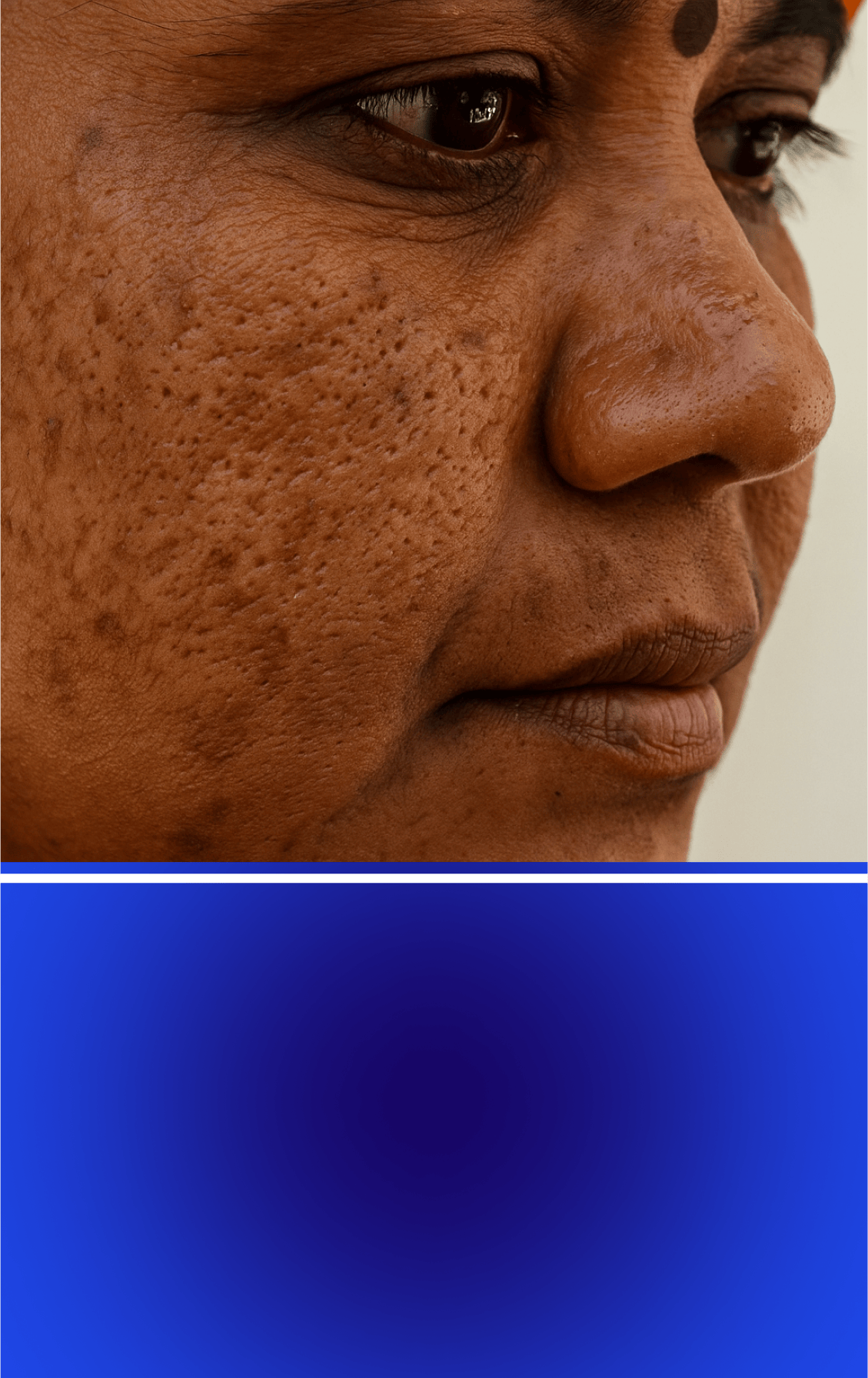
- Ice-pick scars: These are narrow and deep, extending into the skin. CO2 laser may improve their appearance, but they often require combination treatments for better results.
- Boxcar scars: These have defined edges and can be shallow or deep. CO2 laser tends to respond well, especially for moderate-depth scars.
- Rolling scars: These create a wave-like uneven texture. Since they are caused by underlying tissue changes, the CO2 laser can help by improving collagen structure and smoothing the skin over time.
- Mixed acne scar patterns: Many individuals have a combination of scar types rather than a single pattern. In such cases, a CO2 laser is often planned as part of a staged approach, sometimes combined with other treatments to address different depths and textures more effectively over time.
- Textural irregularities after acne: Even when scars are not deeply indented, acne can leave behind uneven skin texture. CO2 laser resurfacing can help improve this by supporting gradual skin renewal and smoothing the surface over multiple sessions.
Overall, atrophic scars (which sit below the skin surface) are the most commonly treated with CO2 laser, as the treatment is designed to stimulate collagen and gradually lift these depressed areas.
Why Scar Type Matters for Treatment Planning
The type of acne scar influences:
- The number of sessions required.
- The intensity of the treatment.
- Whether additional procedures are needed.
For Indian skin types (Fitzpatrick IV–V), this becomes even more important. Treatment settings need to be carefully adjusted to reduce the risk of post-inflammatory pigmentation while still achieving visible improvement.
A proper consultation helps identify your scar type and determine whether CO2 laser alone is suitable or if a combination approach may be more effective.
Still confused about the types of Acne scars? A consultation with a trusted MD dermatologist, Dr Janani Sree C M, can help you decide if CO₂ laser resurfacing fits your skin and recovery goals.
5 CO2 Laser Treatment Clinics for Acne Scars Near East Tambaram, Chennai
Dermatology clinics offering fractional CO2 laser treatment typically provide resurfacing procedures as part of broader skin care services. Clinics may differ in their experience, treatment focus, and consultation approach.
The following clinics are commonly considered by individuals exploring CO2 laser treatment in East Tambaram, Chennai, and nearby areas like Velachery and Medavakkam.
1. Velantis Dermatology
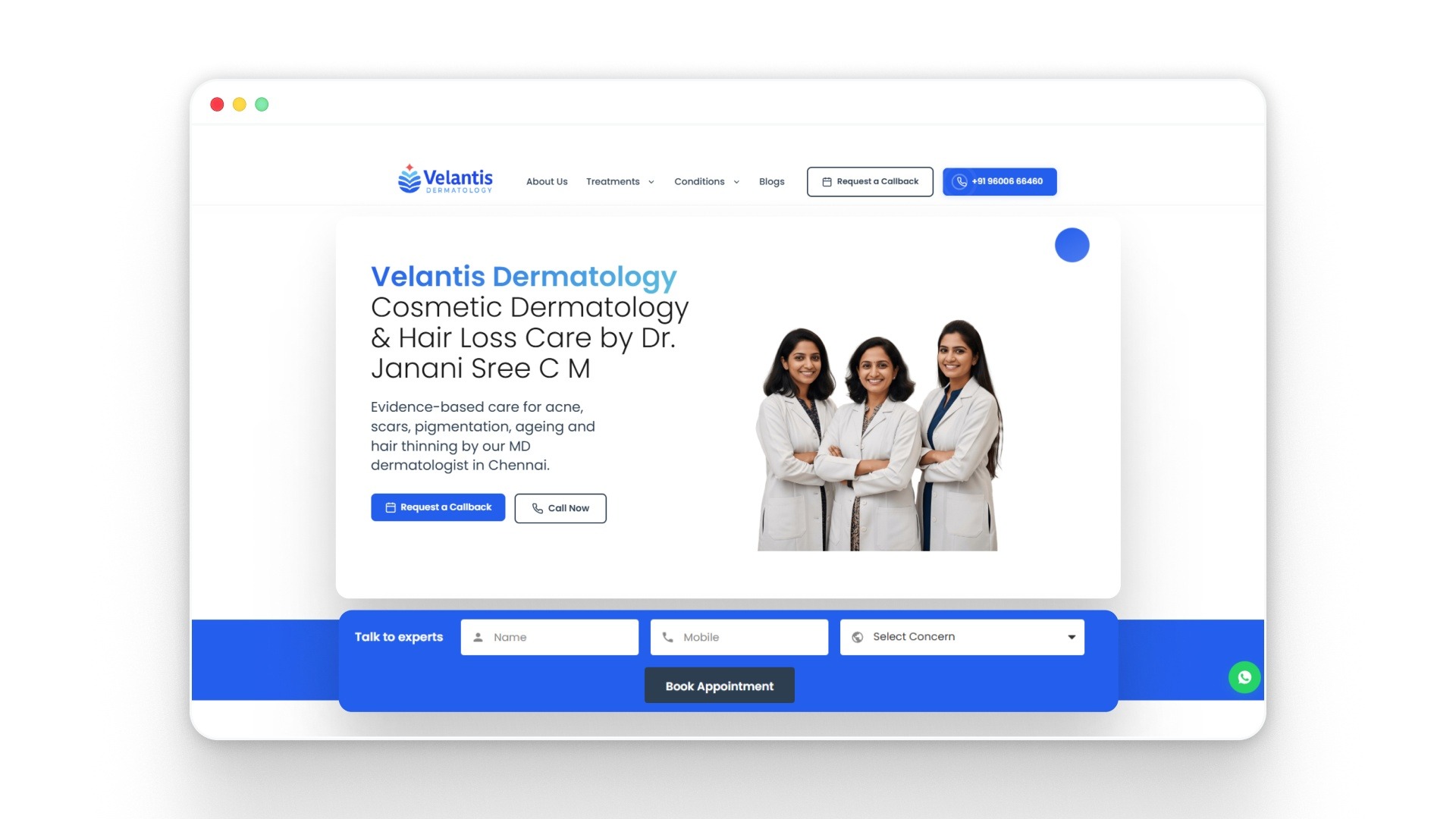
Under the thoughtful clinical leadership of Dr Janani Sree C M, a trusted MD-trained dermatologist, Velantis Dermatology warmly welcomes patients seeking medically guided solutions for various skin concerns, including acne scars, pigmentation changes, and uneven skin texture. Fractional CO2 laser may be considered when acne scars lead to visible textural changes that do not respond to topical care.
At Velantis, consultations are designed to understand scar type, skin behaviour, and recovery tolerance before suggesting resurfacing. This ensures that treatment is not standardised, but aligned with how your skin is likely to respond over time.
What Defines Velantis's Approach
- Dermatologist-led care: Treatment decisions are guided within a medical dermatology framework rather than purely aesthetic selection.
- Scar-focused evaluation: Assessment centres on identifying ice-pick, boxcar, or rolling scars and their depth.
- Customised laser planning: Velantis uses FDA-approved CO2 laser machines, ensuring high safety standards. The laser parameters are specifically adjusted to cater to Indian skin types, minimising pigmentation risks.
- Transparent consultations: Recovery time, session planning, and realistic outcomes are discussed upfront.
- Progress-based treatment: Adjustments are made across sessions depending on healing and response.
How Laser Resurfacing Is Provided
CO2 laser resurfacing is integrated into a broader treatment plan, with attention to both procedure safety and post-treatment care. Skincare guidance and follow-up are included to support recovery and maintain results.
Best Suited For
- Individuals with textural acne scars.
- Patients seeking dermatologist-guided planning.
- Those who prefer gradual, customised resurfacing.
2. Aura Skin & Hair Clinic
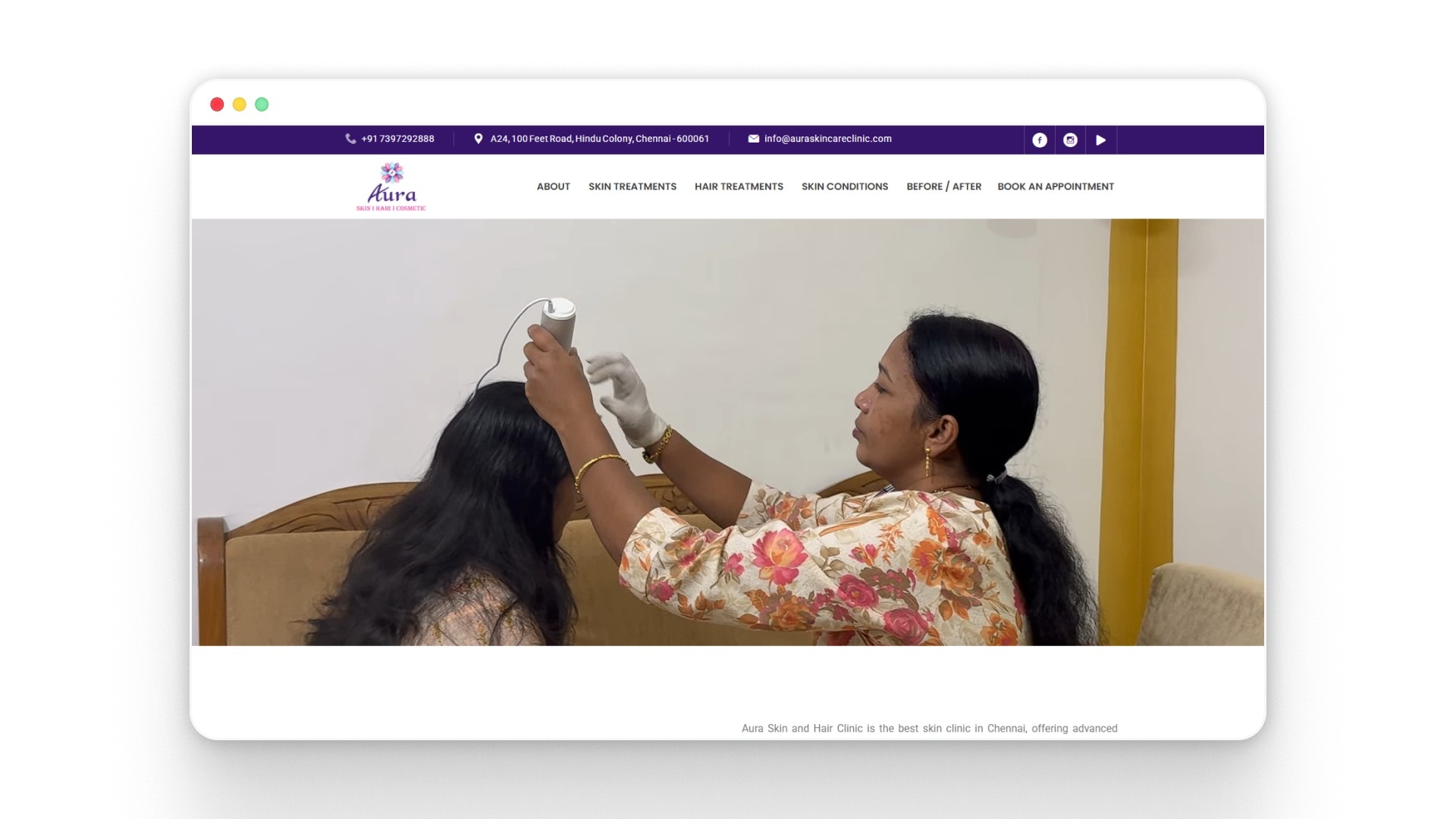
Aura Skin & Hair Clinic offers a wide range of aesthetic dermatology treatments, where acne scar management is often approached through combination therapies rather than a single modality. CO2 laser may be discussed as one of several options depending on the visible concern and treatment goals.
Consultations typically focus on matching treatment options to visible skin concerns, allowing flexibility in how acne scars, pigmentation, and texture are addressed together.
What Defines Aura's Approach
- Multi-treatment framework: CO2 laser is considered alongside other aesthetic procedures when needed.
- Flexible treatment selection: Options may be adjusted depending on how different concerns overlap.
- Aesthetic-focused consultations: Emphasis is placed on visible outcomes and skin appearance.
- Layered treatment planning: Acne scars may be treated in stages using different approaches.
How Laser Resurfacing Is Provided
CO2 laser is positioned as part of a broader aesthetic plan, often combined with other treatments depending on consultation findings. The focus is on addressing multiple skin concerns simultaneously.
Best Suited For
- Individuals with acne scars and pigmentation together.
- Patients are looking for multiple treatment options.
- Those open to combination-based approaches.
3. Oliva Skin & Hair Clinic
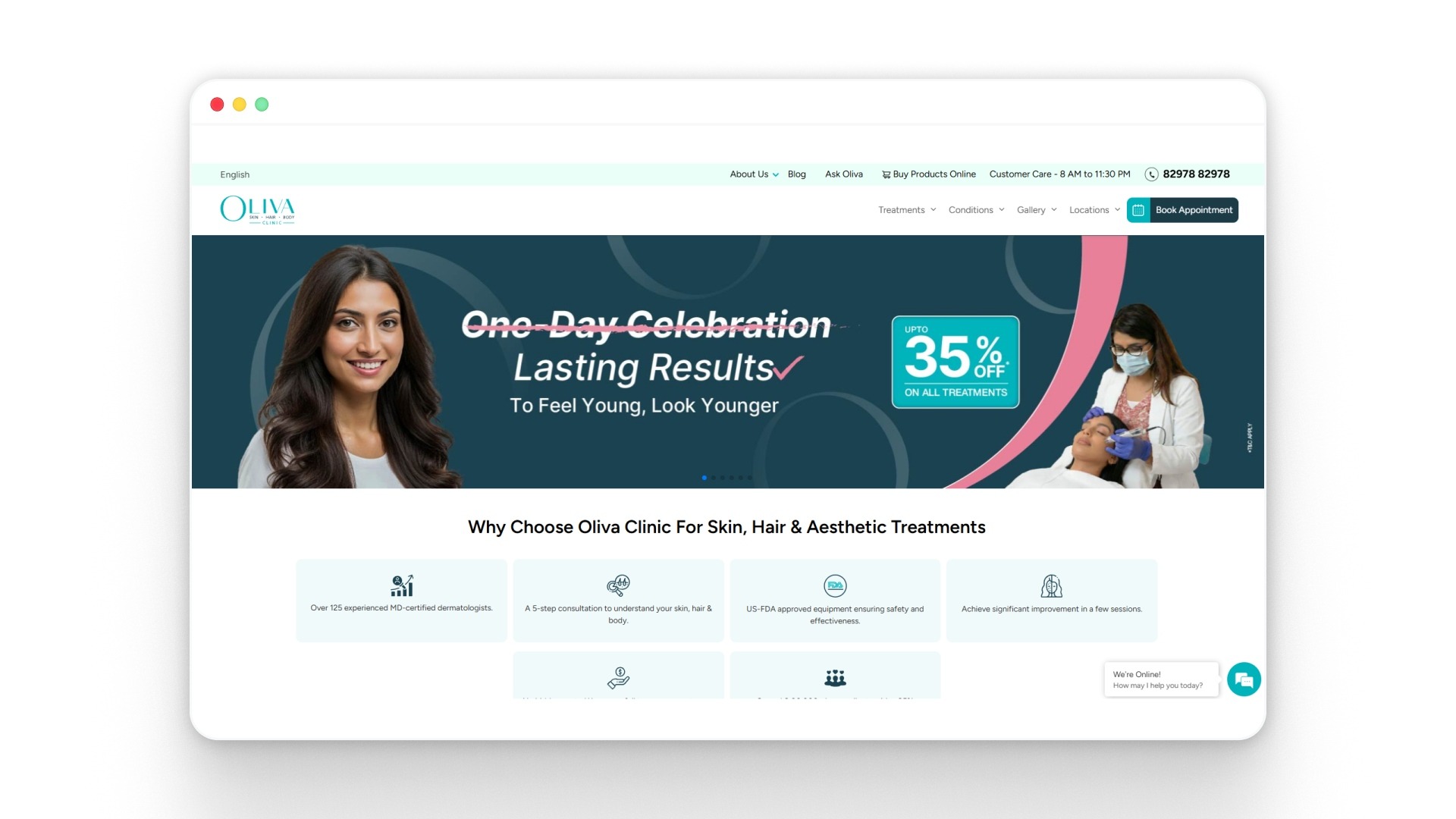
Oliva Skin & Hair Clinic operates as a structured dermatology chain with standardised consultation and treatment protocols. Acne scar treatments, including CO2 laser, are typically recommended within a defined treatment pathway based on initial assessment.
The approach emphasises consistency across sessions, with predefined workflows guiding how treatments are delivered.
What Defines Oliva's Approach
- Protocol-driven treatment: Standardised processes guide consultation and execution.
- Consistency across locations: Similar treatment pathways are followed across centres.
- Structured session planning: Treatments are usually organised in predefined stages.
- Process-oriented care: Focus on maintaining uniformity in how procedures are carried out.
How Laser Resurfacing Is Provided
CO2 laser treatments are delivered as part of a structured plan, with sessions scheduled systematically based on the clinic's protocol.
Best Suited For
- Patients who prefer a predictable, structured process.
- Individuals are comfortable with standardised treatment pathways.
- Those looking for consistency across sessions.
4. Aesthetiq Clinic
Aesthetiq Clinic focuses on aesthetic dermatology, where acne scars are often evaluated in the context of overall skin appearance and texture. CO2 laser may be recommended when textural irregularities affect visible skin smoothness.
Consultations tend to look at how acne scars impact overall skin aesthetics, rather than treating them in isolation.
What Defines Aesthetiq's Approach
- Appearance-focused evaluation: Acne scars are assessed alongside overall skin texture.
- Aesthetic outcome planning: Emphasis on improving visible smoothness and finish.
- Integrated treatment thinking: Multiple concerns may be addressed within the same plan.
- Surface + depth consideration: Both texture and tone may be evaluated together.
How Laser Resurfacing Is Provided
CO2 laser is used as part of an aesthetic improvement strategy, particularly when uneven texture affects overall skin clarity.
Best Suited For
- Individuals are focused on overall skin appearance.
- Patients with mild to moderate textural concerns.
- Those seeking aesthetic-led resurfacing.
5. Dermea Clinic

Dermea Clinic offers both medical dermatology and aesthetic treatments, allowing acne scar concerns to be approached from a clinical as well as cosmetic perspective. A CO2 laser may be recommended depending on the severity and type of scarring.
Consultations typically involve evaluating the underlying skin condition before suggesting resurfacing procedures.
What Defines Dermea's Approach
- Combined dermatology and aesthetic care: Balances medical evaluation with cosmetic treatment.
- Condition-based recommendations: Treatments are suggested based on severity and skin health.
- Holistic skin assessment: Focus extends beyond scars to overall skin condition.
- Flexible treatment pathways: Options may vary depending on diagnosis.
How Laser Resurfacing Is Provided
CO2 laser is offered as one of several treatment options, often positioned within a broader dermatological care plan.
Best Suited For
- Patients seeking both medical and aesthetic evaluation.
- Individuals with multiple skin concerns beyond scarring.
- Those preferring a balanced clinical approach.
Knowing where treatment is available is one part of the decision process. It is also important to understand who may benefit most from fractional CO2 laser resurfacing for acne scars.
What You Can Expect During a Fractional CO2 Laser Session
Understanding how a CO2 laser session is carried out can help you prepare for both the procedure and the recovery that follows. While details may vary based on your skin and treatment plan, most sessions follow a structured sequence.
What Happens During the Session
- Pre-procedure assessment: The treatment area is reviewed to confirm suitability, and the expected downtime is discussed based on how deep the resurfacing is planned.
- Skin preparation: The skin is cleansed, and protective eyewear is used. A numbing cream may be used beforehand based on your skin’s sensitivity and the depth of the treatment.
- Laser application: The CO2 laser delivers controlled micro-injuries to targeted areas of the skin. You might notice warmth or a slight stinging sensation during this stage, even with numbing applied.
- Immediate post-treatment care: Soothing products are applied after the session, and you are guided on aftercare, including how to manage redness, sensitivity, and sun exposure during recovery.
Cost and Number of Sessions for CO2 Laser Treatment
CO2 laser treatment for acne scars in Chennai typically ranges between ₹5,000 to ₹25,000 per session. The cost varies depending on several factors such as:
What affects the cost?
Instead of a fixed price, costs vary based on:
- Extent of the area treated (full face vs targeted areas).
- Depth and intensity of resurfacing.
- Number of sessions required.
- Clinic setup and expertise level.
Because a CO2 laser is a customised treatment, clinics usually provide cost estimates after consultation rather than upfront.
How Many Sessions are Usually Needed?
CO2 laser is typically planned as a series rather than a single session.
- Mild to moderate scars may require 2 to 4 sessions.
- Deeper or mixed scar patterns may need multiple staged sessions.
- Sessions are normally scheduled a few weeks apart to give the skin time to heal.
The exact number depends on how your skin responds after each session, which is why treatment plans are often adjusted over time.
Also Read: GFC Hair Treatment Price in Chennai: Complete Cost Guide (2026)
How to Choose the Right Clinic for CO2 Laser Treatment
Choosing a clinic for CO2 laser treatment involves more than checking availability or proximity. Because the procedure works on deeper layers of the skin, outcomes depend largely on how carefully your treatment is assessed, planned, and adjusted over time.
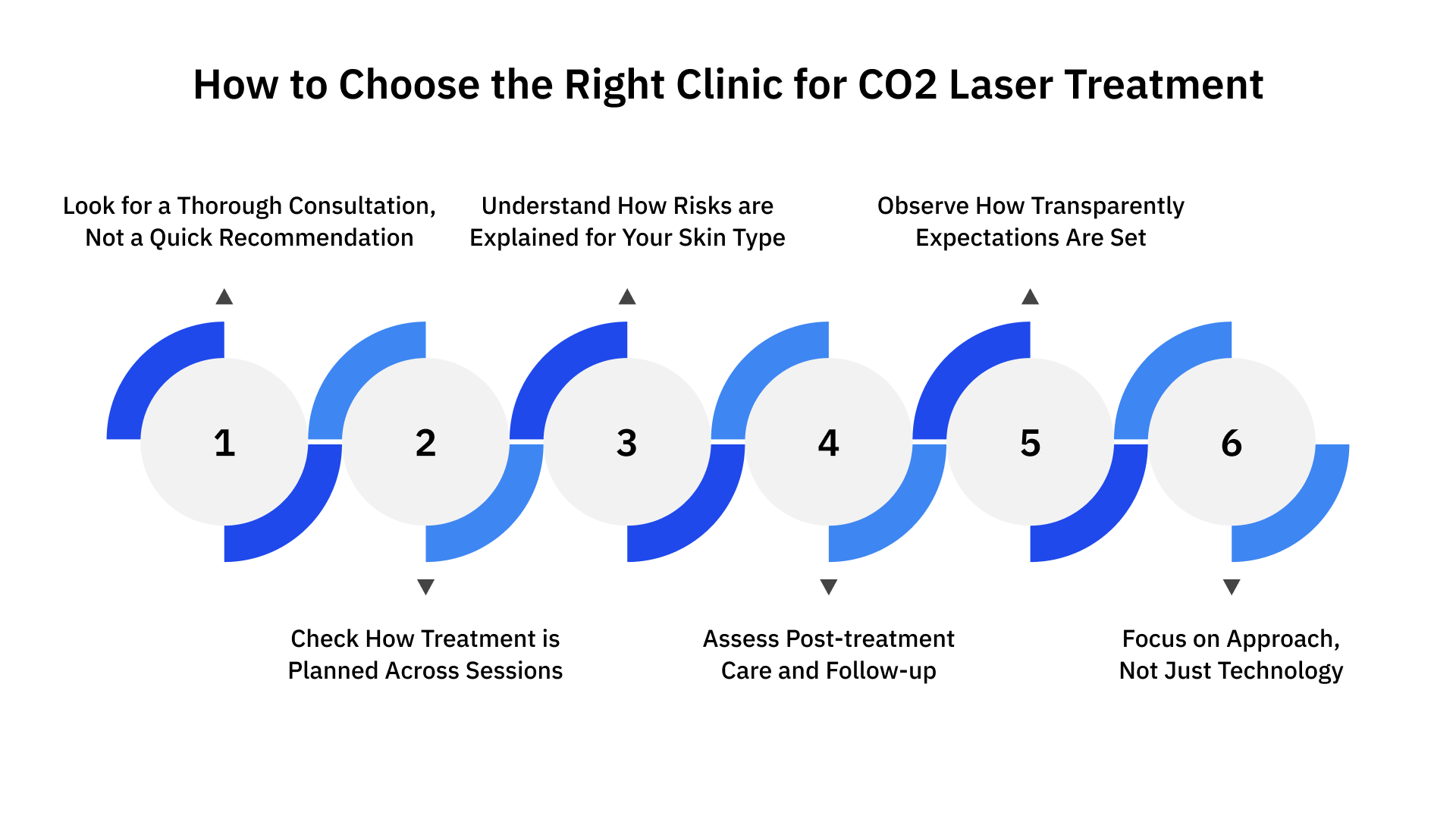
1. Look for a Thorough Consultation, Not a Quick Recommendation
A meaningful consultation should go beyond a surface-level look. The clinic should assess:
- Your scar type and depth.
- Overall skin sensitivity and healing pattern.
- Whether a CO2 laser is appropriate or needs to be combined with other treatments.
If the recommendation feels immediate without detailed evaluation, it may not be tailored to your skin.
2. Check How Treatment is Planned Across Sessions
A CO2 laser is usually not a one-time procedure. Ask:
- How many sessions may be required?
- How is treatment intensity decided?
- Whether adjustments are made based on your skin's response.
A good clinic will explain how your plan evolves rather than offering a fixed package.
3. Understand How Risks are Explained for Your Skin Type
For Indian skin tones (Fitzpatrick IV–V), there is a higher risk of post-treatment pigmentation if settings are not carefully chosen.
Look for clinics that:
- Discuss possible side effects clearly.
- Explain how they reduce risk during treatment.
- Avoid overpromising results.
4. Assess Post-treatment Care and Follow-up
Recovery plays a key role in results. The clinic should provide:
- Clear aftercare instructions.
- Guidance on sun protection and skincare.
- A plan for follow-up or review sessions.
Lack of structured aftercare can affect both healing and outcomes.
5. Observe How Transparently Expectations Are Set
CO2 laser improves texture gradually. Clinics should:
- Explain that results take time
- Set realistic expectations about scar improvement
- Clarify downtime and recovery stages
If results are presented as immediate or guaranteed, it's worth asking more questions.
6. Focus on Approach, Not Just Technology
While equipment matters, outcomes are influenced more by:
- How the laser is used.
- How well is your skin evaluated?
- How consistently is treatment monitored?
Understanding the clinic's approach helps you make a more informed decision than relying on technology names alone.
Note: CO2 laser treatment is highly dependent on clinical judgement and planning. Choosing a clinic that prioritises careful assessment, clear communication, and personalised treatment can make a meaningful difference in both safety and results.
What to Ask During a CO2 Laser Consultation
A consultation helps determine whether a CO2 laser is suitable for you. Some useful questions include:
- What type of acne scars do I have?
- Is a CO2 laser the right treatment for my skin?
- What level of downtime should I expect?
- What risks should I be aware of for my skin type?
- How will post-treatment care be managed?
The way these questions are answered often reflects how carefully the clinic approaches treatment planning.
Conclusion
Acne scars can continue to affect skin texture even after breakouts have settled, making them difficult to manage with topical care alone. Fractional CO2 laser treatment is one option that may help improve the appearance of certain scars, but results depend on how well the treatment is matched to your skin and scar type.
Clinics offering CO2 laser treatment in East Tambaram may vary in how they assess your skin, plan sessions, and guide recovery. Taking the time to understand these differences and discuss your concerns during consultation can help you make a more informed decision.
If you would like to explore whether fractional CO2 laser treatment may be suitable for your acne scars, you may consider booking a consultation at Velantis Dermatology. A trusted dermatologist, Dr Janani Sree C M, can assess your skin profile and discuss treatment options based on clinical evaluation.
FAQs
1. Can a CO2 laser completely remove acne scars?
No, a CO2 laser cannot fully remove scars, but it can significantly reduce their visibility and improve skin texture over time.
2. How do I know if my acne scars are deep enough for CO2 laser treatment?
Scars that feel indented or affect skin texture (like atrophic scars) are more likely to benefit. A consultation helps determine whether the depth justifies resurfacing.
3. How long does it take to see a visible improvement after the CO2 laser?
Some early changes may appear within a few weeks, but a more noticeable improvement develops gradually as collagen rebuilds over months.
4. What does the skin feel like immediately after a CO2 laser session?
The treated area may feel warm, tight, or similar to a sunburn, with redness and mild swelling in the initial days of recovery.
5. Is a CO2 laser suitable for all skin types?
Not always. Darker skin tones need more precise adjustment of treatment parameters, as they carry a greater risk of pigmentation changes, making dermatologist-guided planning essential.
6. Why are multiple sessions often needed for acne scars?
CO2 laser treats only a portion of the skin at a time and works through gradual collagen stimulation, so multiple sessions help achieve more consistent improvement.
7. Can a CO2 laser be combined with other acne scar treatments?
Yes, dermatologists often combine laser resurfacing with other treatments for deeper or mixed scar types to improve overall results.
8. What are the most common side effects after CO2 laser treatment?
Temporary redness, swelling, peeling, and sensitivity are common. In some cases, pigmentation changes may occur, especially if aftercare is not followed properly.
9. How important is sun protection after CO2 laser treatment?
Very important. Exposure to sunlight can affect the healing process and raise the likelihood of pigmentation, which is why consistent sun protection is advised after treatment.
10. Can CO2 laser treatment be done on darker skin tones?
CO2 laser treatment may be considered for darker skin tones with caution. Dermatologists typically assess pigmentation risk and adjust treatment settings to reduce the chance of complications.

.png)
.jpg)
.jpg)