Smooth skin rarely lasts beyond a few days. The cycle of shaving, waxing, or threading often brings back regrowth, bumps, and uneven texture almost immediately, making maintenance feel constant rather than optional.
This is a common concern in India, where hormonal conditions such as PCOS (polycystic ovarian syndrome) contribute to persistent hair growth for many individuals, making routine methods less effective over time.
Recent nationwide studies show that the prevalence of PCOS among Indian women was close to 5.8% (NIH criteria) and 10% (Rotterdam criteria). This means roughly 1 in 10 women of reproductive age in India may be affected, depending on diagnostic standards.
Laser hair removal is often considered a longer-term approach, but results depend heavily on the technology used, treatment planning, and how well it is suited to Indian skin tones.
If you are considering laser hair removal in Sithalapakkam, it helps to look beyond availability and focus on how clinics assess your skin, customise sessions, and prioritise safe, consistent results.
Key Takeaways
- Laser hair removal targets hair follicles in growth phases, which is why multiple sessions are planned over time.
- The treatment approach can vary based on skin tone, hair density, and the area being treated.
- Session spacing and laser settings are usually adjusted to match individual skin and hair response.
- Some individuals may require periodic maintenance to manage regrowth.
- This guide helps you compare clinics in Sithalapakkam and understand how treatment decisions are typically made.
What Happens During Laser Hair Removal Treatment
If you are thinking of laser hair removal, it helps to understand how the treatment targets hair growth. Laser devices emit focused light energy, which is absorbed by the pigment in hair follicles. This process may affect the follicle's ability to produce new hair over time.
Dermatologists usually assess:
- Your skin tone and sensitivity.
- The colour and thickness of hair.
- The area being treated.
Hair growth follows a cycle, so repeated sessions help target hair during its active phase.
Note: A study published in Lasers in Medical Science (Springer), involving researchers from institutions such as the University of Siena and the University of Perugia, assessed laser hair removal outcomes and observed reductions in hair thickness and overall hair growth over time.
Laser Hair Removal for Indian Skin Types
The Fitzpatrick skin type scale classifies skin tones from I (very fair) to VI (very dark); many individuals in Chennai fall within Fitzpatrick skin types IV to VI, which makes the choice of laser technology especially important. Certain systems, such as diode and Nd: YAG lasers, are often preferred for darker skin tones because they are designed to minimise the risk of pigmentation changes.
When you consult a clinic, it may help to ask about the type of laser equipment used and whether it is suitable for your specific skin type. This can support safer treatment planning and more consistent outcomes.
Body Areas You Can Consider For Laser Hair Reduction
Laser hair reduction can be performed on different parts of the body depending on your preference.
Common areas include:
- Upper lip and chin
- Underarms
- Arms and legs
- Bikini area
- Back and chest
The number of sessions and spacing between them may vary depending on the treatment area.
If you are thinking of laser hair reduction and would like a dermatology-based evaluation, you may consult Dr. Janani Sree C M at Velantis Dermatology to understand suitable treatment options.
5 Best Laser Hair Removal Clinics in Sithalapakkam, Chennai
If you are exploring laser hair removal in Sithalapakkam, understanding how each clinic approaches treatment, technology, and consultation can help you choose more confidently. While multiple clinics may offer similar procedures, the equipment used, consultation depth, and treatment experience can differ.
1. Velantis Dermatology
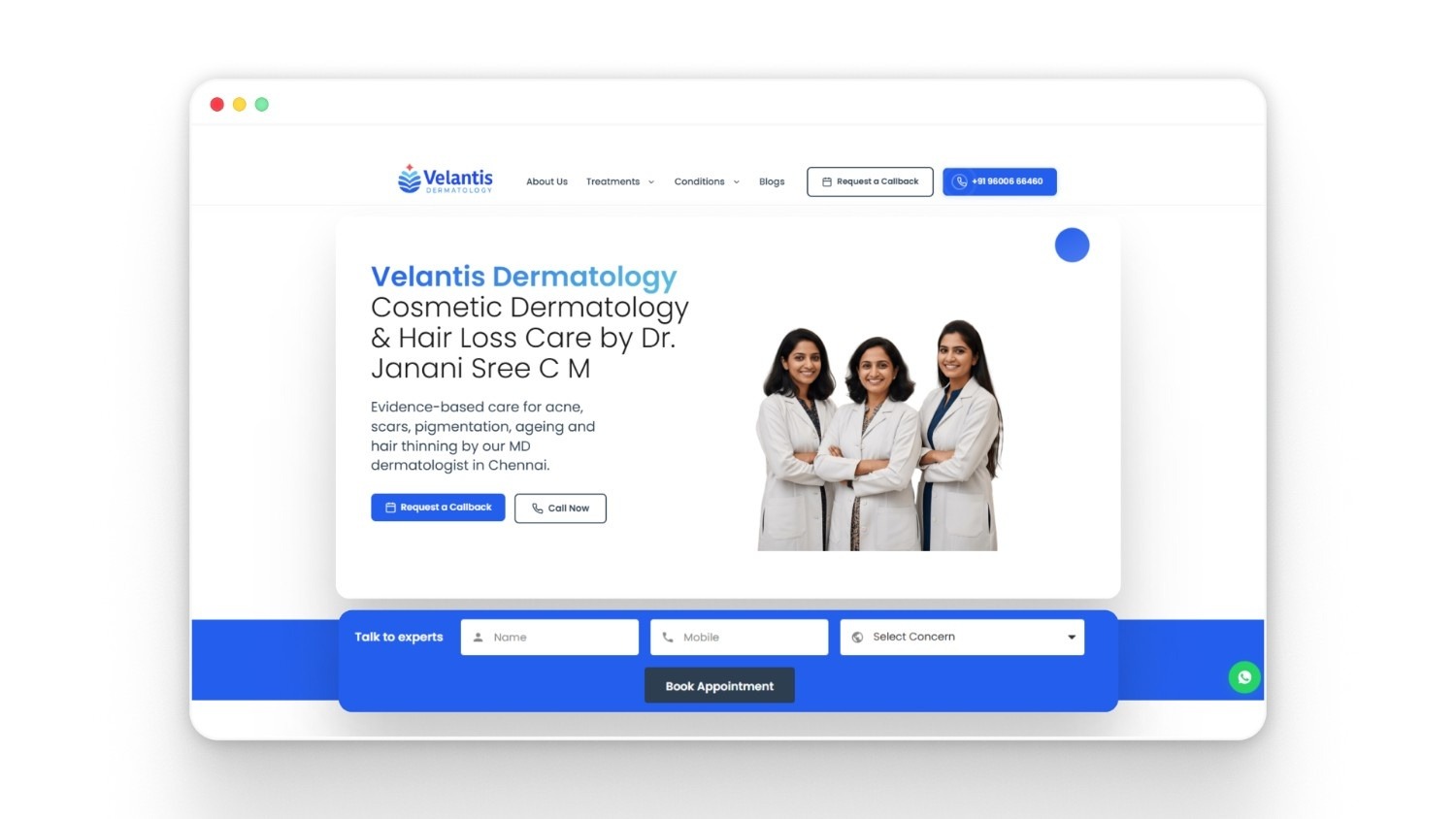
At Velantis Dermatology, treatments are guided by trusted MD dermatologist Dr. Janani Sree C M, with a focus on medically supervised skin procedures.
Laser hair removal here is typically planned after evaluating your skin tone, hair thickness, and treatment area, which can influence the choice of laser settings and sessions.
What Makes Velantis Different
- The only MD-dermatologist-led clinic physically located in Sithalapakkam.
- Consultation-led treatment planning based on skin and hair profile.
- Evidence-based protocols with safety-first settings to reduce the risk of pigmentation changes.
- Use of FDA-approved laser systems suited for Indian skin types (Fitzpatrick IV–VI).
- Guidance on session spacing and expected treatment progression.
- 500+ verified patient reviews reflecting consistent clinical care.
Best Suited For
- You may consider this clinic if you prefer dermatologist-supervised laser treatment closest to Sithalapakkam.
- It may suit you if you are looking for treatment tailored to Indian skin types with full MD oversight.
2. Oliva Clinic
sourcelink
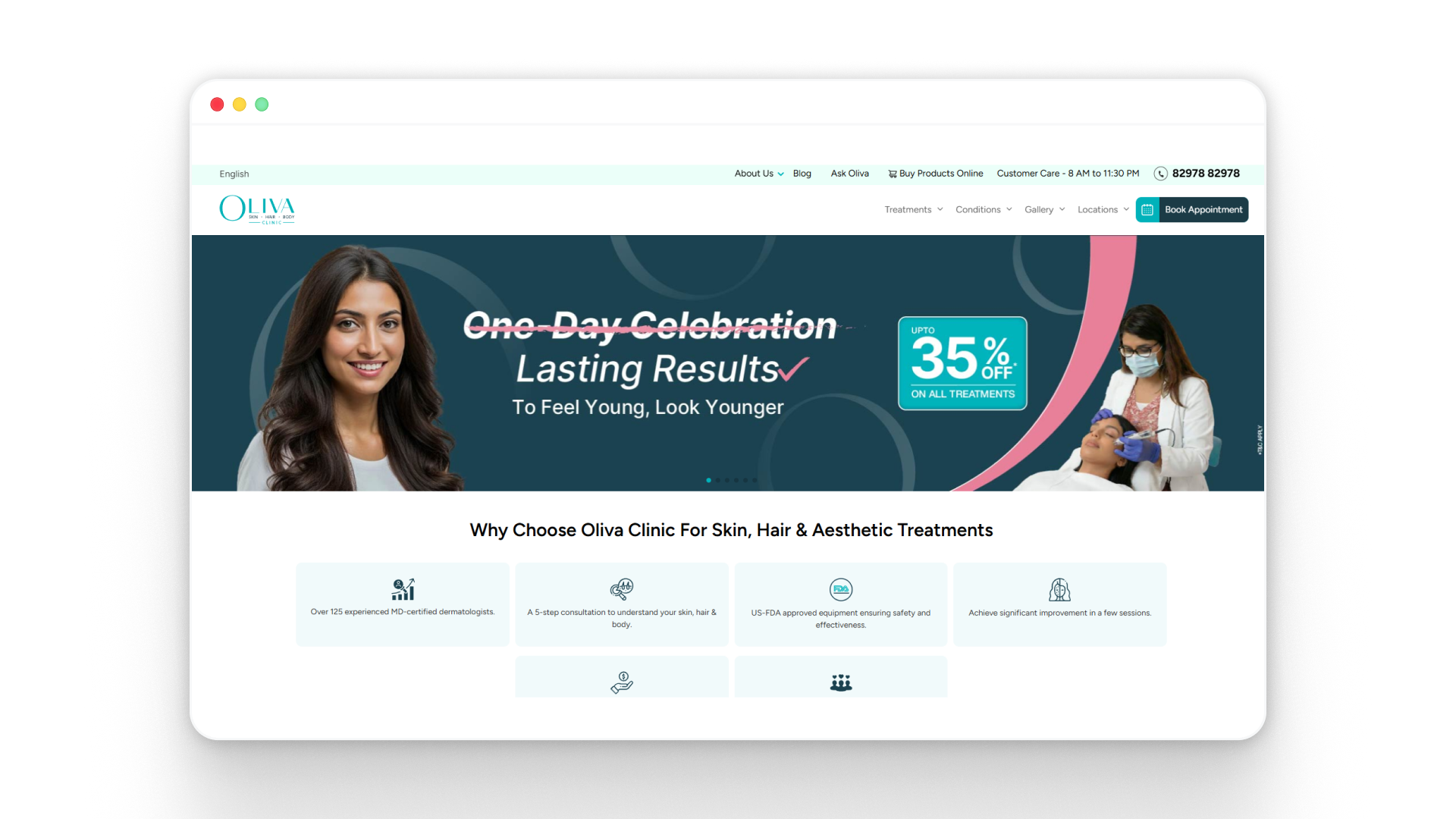
Oliva Clinic operates as a multi-city dermatology network, offering laser hair removal alongside a range of skin treatments. The clinic uses Soprano ICE, a USFDA-approved diode laser technology known for its effectiveness across skin tones, including darker Indian skin.
What Makes Oliva Different
- The presence of multiple branches across Chennai may offer flexibility in appointment scheduling.
- Structured 5-step consultation process covering skin, hair, and body assessment.
- Availability of online booking systems and structured consultation flow.
- Package-based pricing available for multiple sessions or larger body areas.
Best Suited For
- You may consider this clinic if you prefer standardised treatment processes across locations.
- It may suit you if you are looking for structured packages and easier scheduling options.
3. SKY Skin & Laser Clinic
sourcelink
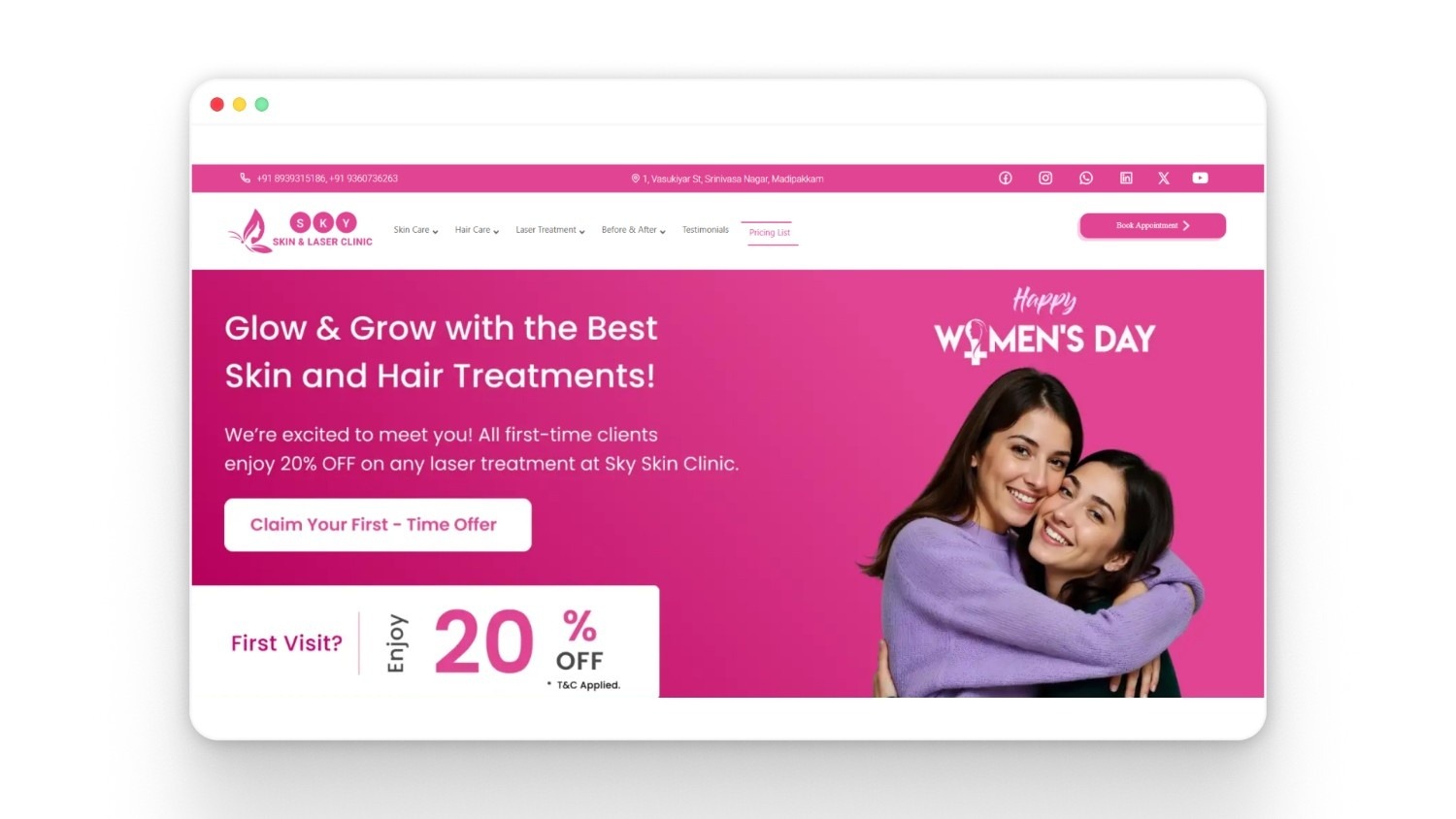
SKY Skin & Laser Clinic focuses on aesthetic dermatology treatments with an emphasis on device-based procedures, including laser treatments. The clinic uses diode lasers as its primary technology for laser hair removal.
What Makes SKY Different
- Availability of laser-focused treatment options within the clinic.
- Patch testing is conducted before starting the first session.
- Clinics may conduct patch testing before initial sessions to assess skin response.
- Focus on technology-driven procedures for skin and hair concerns.
Best Suited For
- You may explore this clinic if you are specifically looking for a laser-focused setup with strong patient feedback.
- It may suit you if you prefer clinics that emphasise device-driven procedures.
4. Sia Skin & Hair Clinic

sourcelink
Sia Skin & Hair Clinic offers treatments for skin and hair concerns, including procedures related to unwanted hair management. The clinic is led by Dr. Swetha, a dermatologist offering personalised solutions for a range of skin and hair concerns, including laser hair removal alongside anti-ageing, chemical peels, and hair regrowth treatments.
What Makes Sia Skin & Hair Clinic Different
- Treatments may be performed by trained technicians or under clinical supervision, depending on the procedure.
- Laser hair removal is offered as part of a broader aesthetic dermatology practice.
- Area-based or session-based treatment plans, depending on patient preference.
Best Suited For
- You may consider this clinic if you are looking for accessible aesthetic treatments in a clinic setting.
- It may suit you if you prefer combining laser hair removal with other skin or hair concerns in the same consultation.
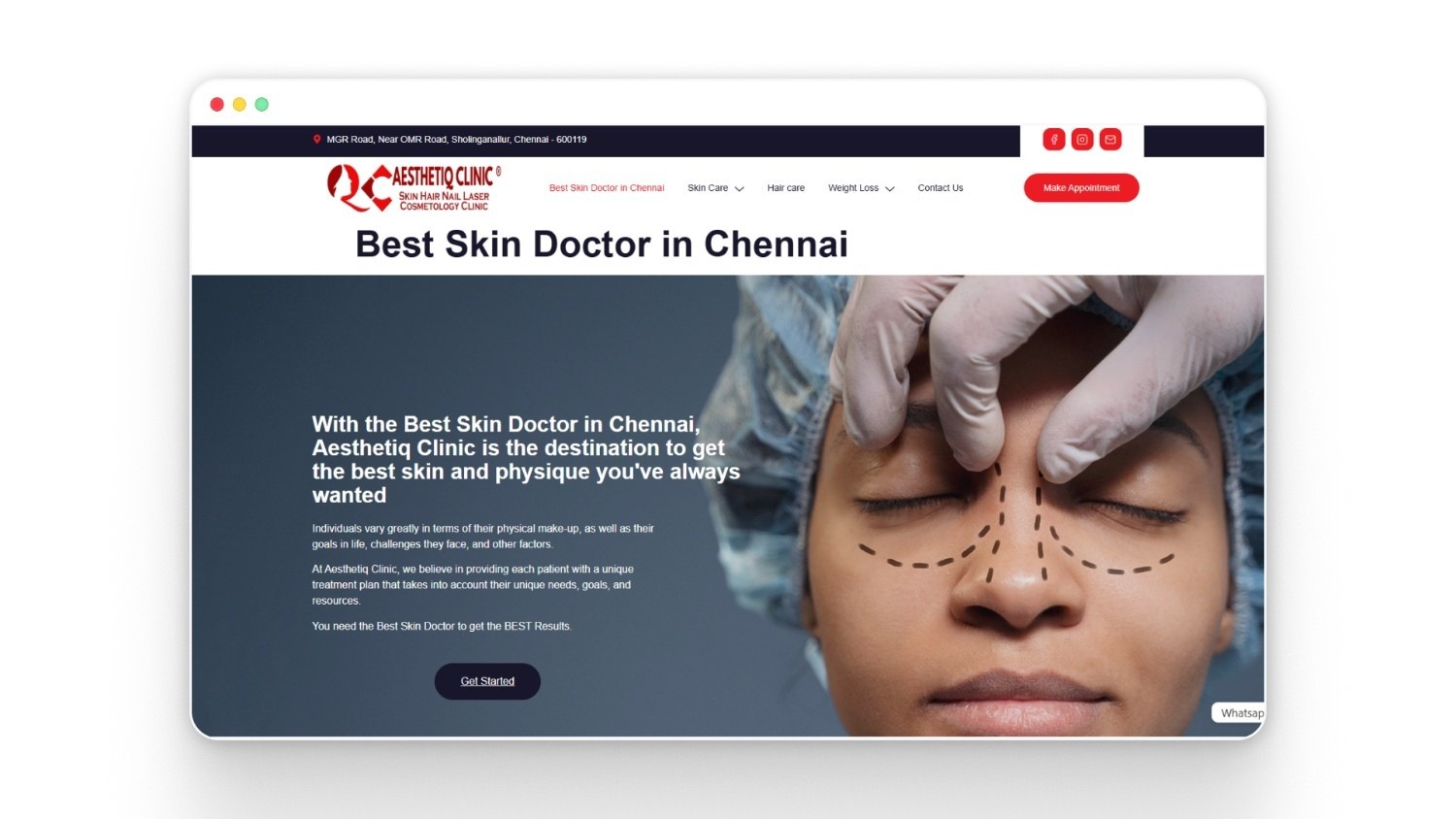
5. Aesthetiq Clinic
sourcelink
Aesthetiq Clinic provides aesthetic dermatology treatments addressing concerns related to skin appearance and texture.
What Makes Aesthetiq Different
- Focus on cosmetic dermatology with a broad range of laser and skin treatments under one roof.
- Multi-modal laser systems allow combination approaches for different concerns.
- Treatments may be integrated with other aesthetic procedures, depending on your concerns.
- Experienced physician with a background in long-standing aesthetic dermatology practice.
Best Suited For
- You may explore this clinic if you are looking for aesthetic-focused skin treatments.
- It may suit you if you prefer clinics that integrate multiple cosmetic procedures within a single care plan.
Also Read: Best Dermatologist in Chennai: Celebrities' Top Picks
Understanding the Cost of Laser Hair Removal
If you are considering treatment, cost can vary depending on the clinic and treatment area.
Area-wise Approximate Pricing Guide
Note: Prices are approximate across clinics in the Sithalapakkam, Chennai region and differ by clinic, technology used, and number of sessions recommended. Exact costs are discussed during consultation.
7 Reasons That May Influence the Cost of Laser Hair Removal
The price of laser hair reduction can differ depending on factors such as the treatment area, hair characteristics, and the clinic's approach to planning and performing the procedure.
1. Treatment area and size: Larger areas like the back or legs usually cost more than smaller areas such as the upper lip or underarms.
2. Number of sessions required: Multiple sessions are typically needed for effective results, which can impact the overall treatment cost.
3. Hair type and thickness: Coarser or denser hair may require more sessions or adjusted settings, influencing pricing.
4. Skin type and sensitivity: Different skin types may require customised treatment settings, which can affect the procedure approach and cost.
5. Technology and laser system used: Clinics may use different laser technologies based on skin and hair type, which can influence pricing.
6. Dermatologist supervision and clinic expertise: Treatments performed under qualified dermatologists may involve higher costs due to clinical evaluation and safety protocols.
7. Package plans and follow-up sessions: Some clinics offer bundled session packages or include follow-up care, which can affect overall pricing.
Also Read: GFC Hair Treatment Price in Chennai: Complete Cost Guide (2026)
What to Ask During a Laser Hair Removal Consultation
Before starting treatment, it helps to move beyond general explanations and focus on specifics. These questions can give you a clearer sense of how your treatment will actually be delivered.
5 Things to Look for When Selecting a Laser Hair Removal Clinic
If you are planning laser hair removal in Sithalapakkam, selecting a clinic involves more than simply checking availability. Looking at how a clinic manages consultation, safety measures, and treatment planning can help you make a more informed choice.
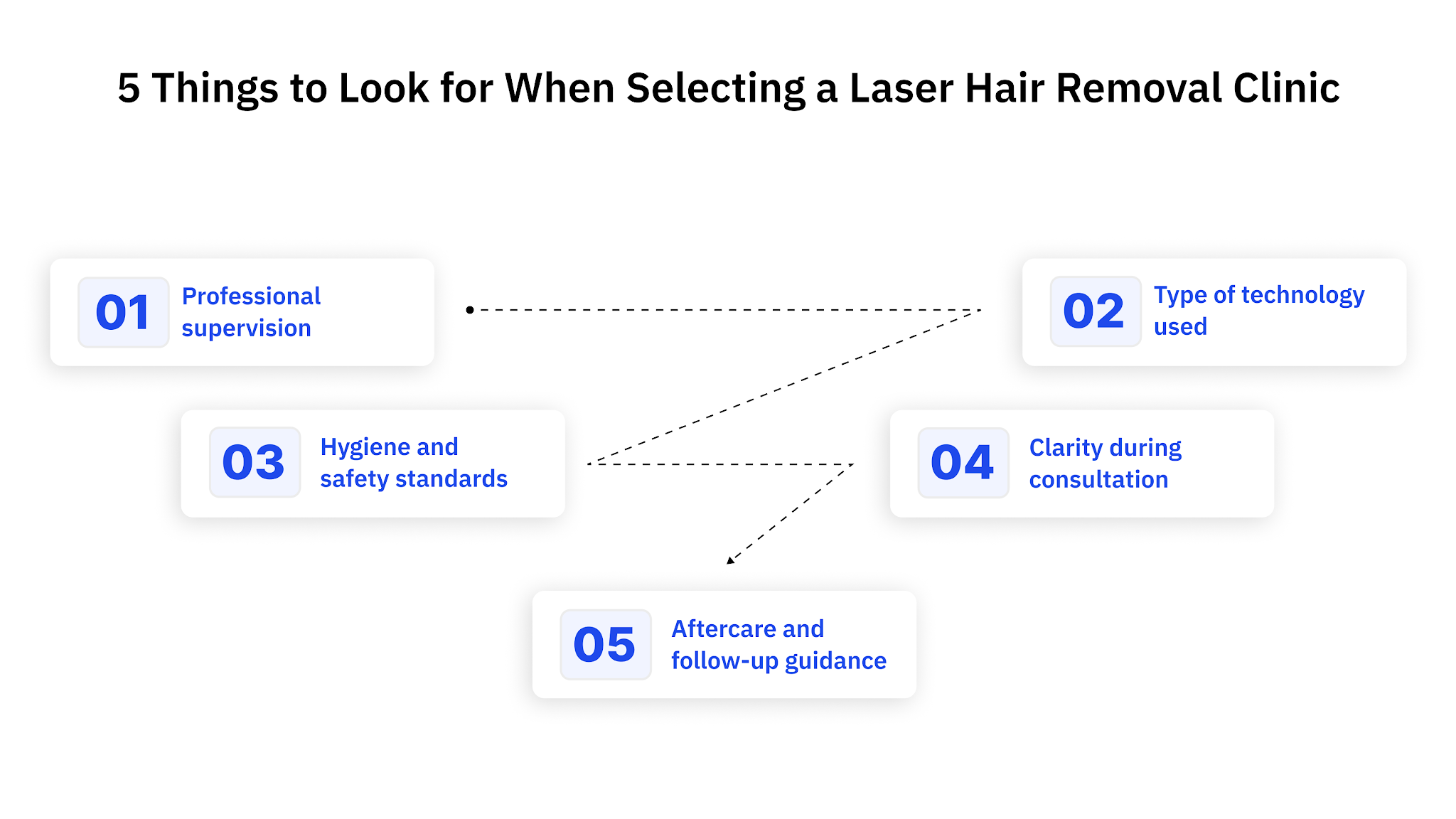
Here are some important factors you may want to evaluate:
1. Professional supervision: It can be helpful to know whether your skin and hair type are assessed by a qualified professional before treatment, especially to determine appropriate settings and suitability.
2. Type of technology used: Clinics that use updated laser systems may be able to adjust treatments based on your skin tone and hair characteristics, which can support a more tailored approach.
3. Hygiene and safety standards: A well-maintained and clean treatment environment plays an important role in minimising the risk of skin irritation or complications.
4. Clarity during consultation: Clinics that explain the number of sessions, expected progress, and possible limitations beforehand can help you set realistic expectations.
5. Aftercare and follow-up guidance: Post-treatment advice and follow-up support can help you manage your skin response and maintain results over time.
Taking the time to review these aspects can help you choose a clinic that aligns with your expectations and supports a more informed treatment experience.
What Happens Before, During, and After Laser Hair Removal
Before treatment, the dermatologist typically assesses your skin type, hair characteristics, and treatment area to determine whether laser hair removal is suitable and how the procedure should be planned.
During treatment, controlled laser energy is delivered to the targeted area to act on hair follicles. The duration of the session depends on the size of the treatment area.
After treatment, mild redness or sensitivity may occur temporarily. Dermatologists usually provide basic aftercare guidance, including sun protection and gentle skincare, to support recovery.
How Laser Hair Removal Is Planned Over Multiple Sessions
Laser hair removal is typically carried out over multiple sessions, as hair growth occurs in cycles, meaning not all follicles can be treated during a single session. Dermatologists usually schedule sessions a few weeks apart to align with these growth phases and improve treatment effectiveness.
The overall number of sessions may vary depending on the specific treatment area, hair thickness, and individual response. Smaller areas may require fewer sessions, while larger or denser areas may need a longer treatment plan.
In some cases, maintenance sessions may be discussed to manage regrowth over time. A personalised plan helps ensure the treatment is adapted to your skin and hair characteristics.
Conclusion
Laser hair removal is often considered a longer-term approach to managing unwanted hair, but understanding how your skin and hair type influence treatment response is an important part of the process.
If you are exploring laser hair removal in Sithalapakkam, focusing on clinics that prioritise safe practices, suitable technology, and clear communication can help you make more informed decisions.
If you would like to understand whether this treatment may be suitable for your skin, you may consider booking a consultation with Dr. Janani Sree C M at Velantis Dermatology today for a dermatology-based evaluation.
FAQs
1. How do dermatologists decide the right laser settings for your skin?
Dermatologists adjust laser settings based on skin tone, hair thickness, and treatment area. This helps balance effectiveness while reducing the risk of skin irritation or pigmentation changes.
2. Can laser hair removal be done on recently tanned skin?
Laser hair removal is usually postponed if the skin is recently tanned, as increased melanin levels may raise the risk of sensitivity or pigmentation changes. Dermatologists often recommend waiting before treatment.
3. Why do some hairs grow back after laser hair removal?
Hair growth occurs in phases, so not all hair follicles are active at the same time during a treatment session. Some regrowth can occur, which is why multiple sessions and occasional maintenance treatments may be needed.
4. Can laser hair removal help reduce ingrown hairs?
Laser hair removal may help reduce ingrown hairs by targeting hair follicles and limiting future hair growth, which can reduce the chances of hair curling back into the skin.
5. Is laser hair removal suitable for multiple body areas?
Laser hair removal can be used across multiple body areas, including the face, arms, legs, and underarms. Dermatologists usually assess suitability based on skin sensitivity and hair type in each area.
6. How should you prepare your skin before a laser hair removal session?
Before treatment, dermatologists may recommend avoiding sun exposure, waxing, or strong skincare products. Shaving the area may be advised to help the laser target hair follicles effectively.
7. Can hormonal conditions affect laser hair removal results?
Hormonal conditions such as PCOS may influence hair growth patterns, which can affect how the skin responds to treatment. Dermatologists may adjust treatment plans based on individual conditions.
8. What type of laser is commonly used for hair removal?
Different laser systems, such as diode or Nd: YAG lasers, may be used depending on skin tone and hair characteristics. Dermatologists choose the technology based on safety and effectiveness.
9. Can laser hair removal be done alongside other skin treatments?
In some cases, dermatologists may recommend spacing laser hair removal and other skin treatments to avoid irritation. Treatment plans are usually adjusted based on skin sensitivity.
10. How do you know if a clinic follows safe laser hair removal practices?
Look for dermatologist supervision, proper skin assessment, and clear aftercare guidance. Clinics that explain treatment limitations and safety precautions often follow more structured practices.

.png)

.jpg)
.jpg)