Hair thinning and progressive hair loss often develop gradually, making it difficult to decide when medical intervention is necessary. You may notice increased shedding, reduced density along the scalp, or slower regrowth over time. In such cases, Platelet-Rich Plasma (PRP) therapy is commonly explored as a medically supported option to improve scalp health and support hair follicles when used appropriately and after proper evaluation.
PRP hair treatment is not a cosmetic shortcut. It is a procedure that relies on your own blood components and requires careful assessment, correct technique, and realistic expectations.
If you are considering PRP treatment in Padur, Chennai, it is important to understand how the therapy works, who it is suitable for, and what outcomes can reasonably be expected based on your hair loss pattern and scalp condition.
Key Takeaways
- PRP hair treatment uses platelet-rich plasma from your own blood to support existing hair follicles and is most effective for early to moderate hair thinning, not long-standing bald areas.
- PRP works best when planned as a series of sessions based on proper diagnosis, scalp health, and active follicles rather than as a one-time procedure.
- While PRP does not create new hair or fully reverse genetic hair loss, it may help reduce shedding and support hair quality when used appropriately and consistently.
- Choosing a PRP clinic in Padur should focus on medical evaluation, who performs the treatment, hygiene standards, follow-up care, and realistic outcome counselling.
- Velantis Dermatology, led by Dr. Janani Sree C M, provides dermatologist-led PRP treatment with personalised, evidence-based planning focused on long-term hair health.
What Is PRP Hair Treatment and How Does It Work?
PRP hair treatment, short for Platelet-Rich Plasma therapy, is a medical procedure used to support hair follicles in individuals experiencing hair thinning or early hair loss. The treatment uses a concentrated portion of your own blood that contains platelets and growth factors involved in tissue repair and cellular activity.
In PRP therapy, a small blood sample is collected and processed using a centrifuge to separate platelet-rich plasma from other blood components. This concentrated plasma is then injected into targeted areas of the scalp where hair density has reduced or follicle activity appears weaker. The intention is to support follicle function and improve the scalp environment rather than to create new hair follicles.
PRP treatment is commonly considered when hair follicles are still active and capable of responding to stimulation. Its role is supportive and works best when selected based on individual assessment rather than as a standalone solution.
- Uses platelets derived from your own blood
- Focuses on supporting existing hair follicles
- Commonly considered for early to moderate hair thinning
- Requires multiple sessions planned over time
- Results vary based on scalp health and individual response
When used appropriately, PRP therapy can form part of a structured and medically guided approach to managing hair thinning, with the aim of supporting existing hair rather than promising instant or guaranteed regrowth.
Now that you understand what PRP hair treatment involves, it is equally important to know the types of hair loss for which it may be appropriate and where its benefits are limited.
Are you considering hair restoration treatments? Book a consultation for PRP hair therapy at Velantis Dermatology, where treatment is guided by clinical assessment and evidence-based care.
Top 5 PRP Clinics for Hair Loss Treatment in Padur, Chennai
PRP hair treatment is offered across different clinical settings, and the experience can vary depending on who evaluates your hair loss, how the procedure is planned, and what follow-up support is provided.
Below is an overview of clinics commonly considered for PRP hair treatment, starting with a dermatologist-led approach.
1. Velantis Dermatology
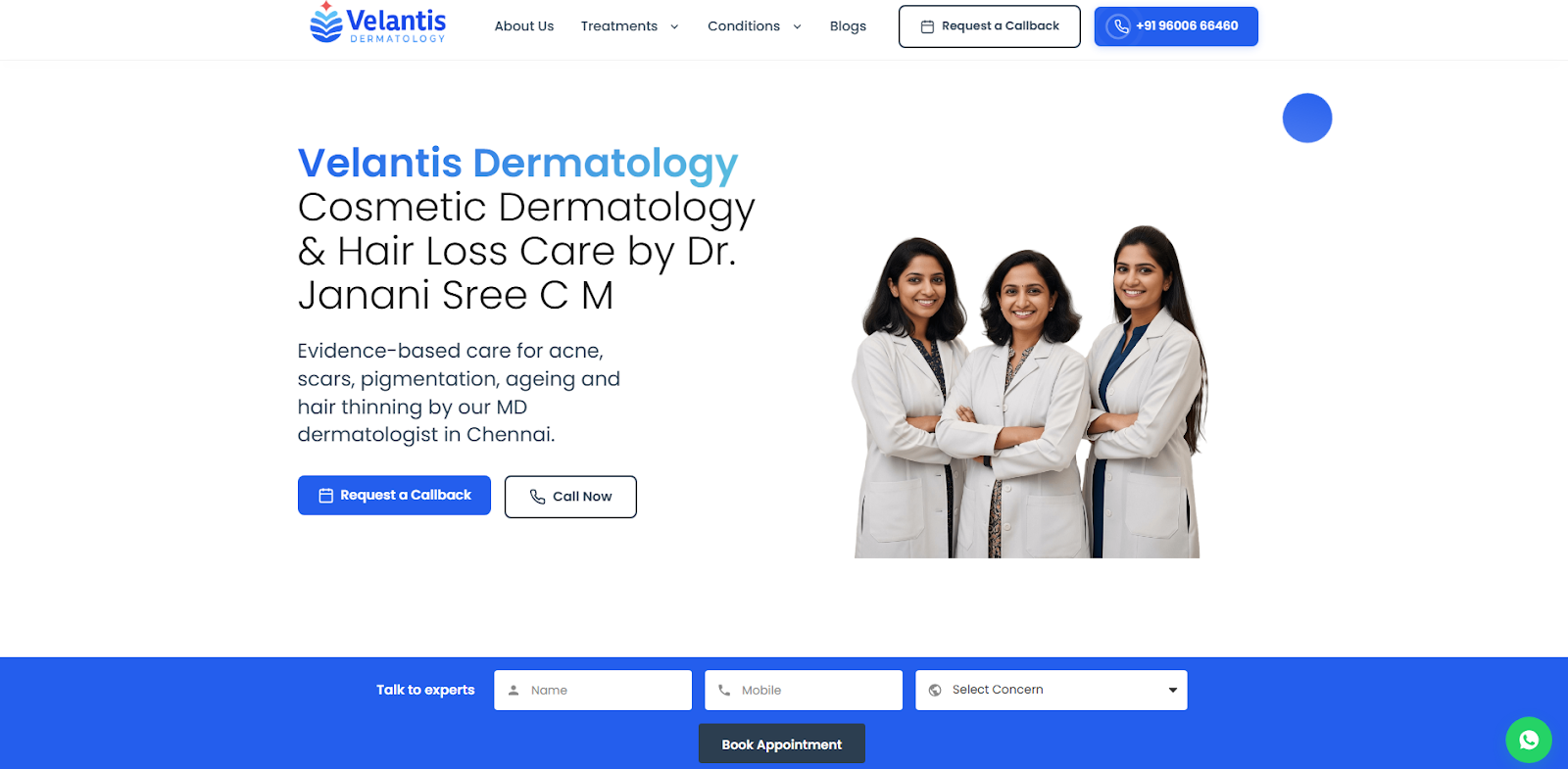
Velantis Dermatology is led by Dr. Janani (MD dermatologist), trained in evidence-based interventions for medical and aesthetic skin and hair conditions, including hair thinning and progressive hair loss. PRP treatment at Velantis is approached as a medical procedure rather than a cosmetic service. Each treatment plan is customised based on individual hair concerns following a detailed clinical and scalp assessment.
What makes Velantis stand out:
- Dermatologist-led evaluation and treatment planning
- Focus on evidence-based protocols rather than standardised packages
- Emphasis on patient education and realistic expectations
- PRP positioned as part of a structured hair loss management plan
Treatment is done:
- After assessing hair loss pattern, scalp condition, and medical history
- Using sterile, medically supervised techniques
- As a planned series of sessions rather than a one-time procedure
Best suited for:
- Individuals with early to moderate hair thinning
- Those seeking a medically guided, diagnosis-first approach
- Patients who value clinical assessment over cosmetic promises
Book your appointment at Velantis Dermatology to understand whether the treatment suits your hair loss pattern and expectations.
2. Oliva Skin and Hair Clinic
sourcelink
Oliva clinics are known for offering PRP as part of their broader hair fall and scalp care services. PRP is positioned as a non-surgical option for hair thinning and is commonly offered alongside other hair-related treatments.
What they offer:
- PRP hair therapy as part of hair fall management
- Multiple clinic branches and standardised service delivery
Consultation fee and timings: Consultation charges and timings are typically displayed on their website or third-party platforms
Strengths:
- Structured service models
- Dedicated hair treatment menus
PRP positioning on their site: Described as a supportive treatment for hair regrowth and hair strengthening
3. Aura Skin & Hair Clinic
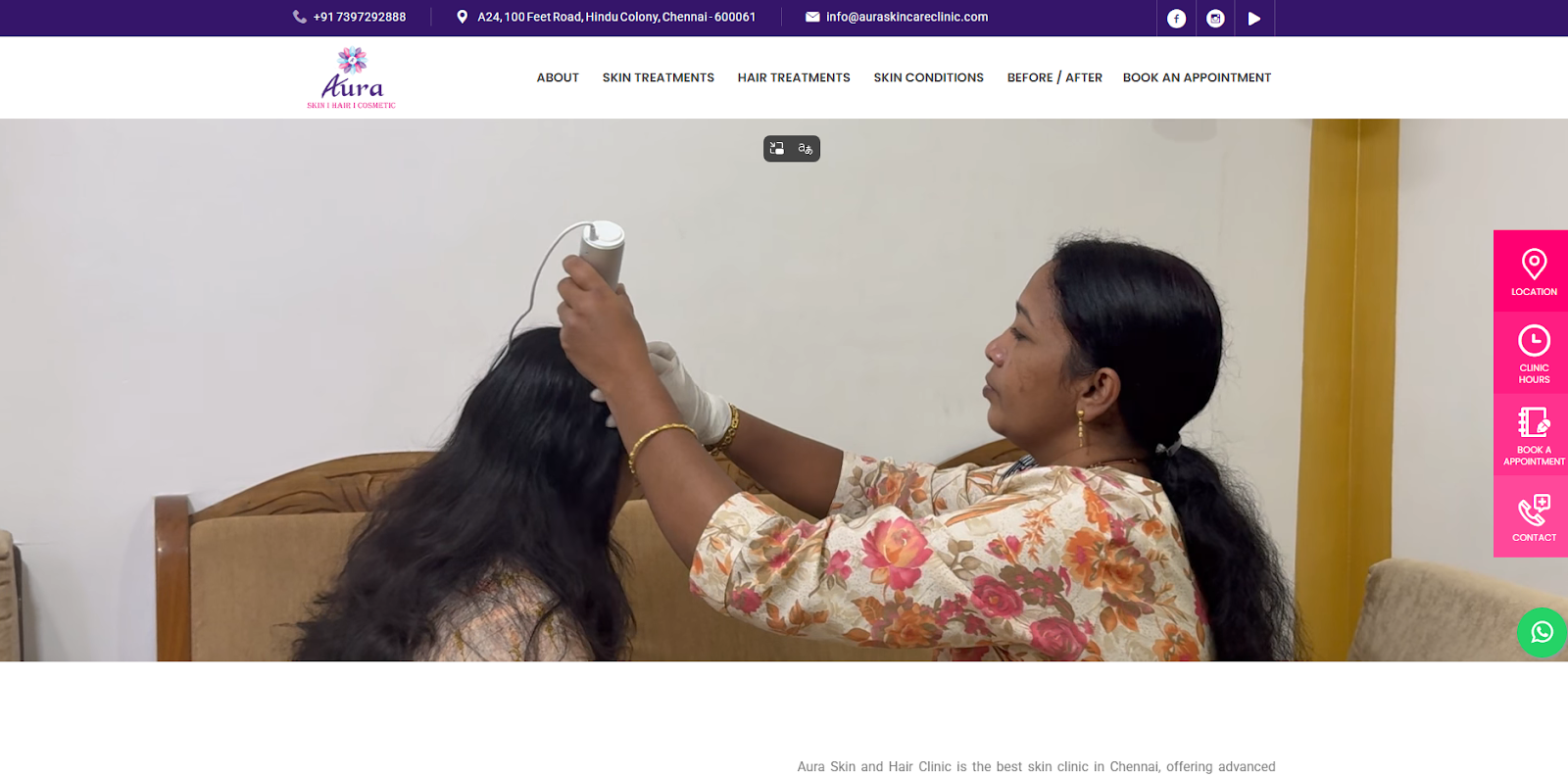
Aura Skin & Hair Clinic is a dermatology‑led clinic with a focus on medically supervised hair loss treatments, including PRP. The clinic is led by experienced dermatologists with a strong track record in hair restoration.
What they offer:
- PRP as part of a broader hair restoration service
- Medically supervised treatments with an emphasis on evidence-based care
Patient Reviews: Strong positive reviews across platforms like Justdial, Practo, etc., with high ratings (4.7-4.9). Patient testimonials frequently mention their PRP treatments as effective.
Strengths:
- High-quality patient care with experienced dermatologists
- Focus on evidence-based protocols for hair loss management
PRP positioning on their site: Clear mention of PRP as a key service for hair restoration with a focus on medical care rather than cosmetic treatments
4. Mahi Skin and Hair Care

Mahi Skin and Hair Care is a dermatologist-led clinic that offers medical-grade skin and hair treatments, including PRP therapy. Dr. Mahi's clinic is well-reviewed and focuses on personalized hair care, enhancing its credibility for PRP treatments.
What they offer:
- PRP therapy and other medically supervised hair loss treatments
- Strong emphasis on personalized care and scientifically proven methods
Patient Reviews: The clinic has strong reviews and mentions PRP treatment as a major service for hair loss.
Strengths:
- Personalized approach to hair care
- Evidence-based treatments and a focus on medically backed solutions
PRP positioning on their site: PRP is positioned as a core service for addressing hair thinning and hair loss, with professional oversight
5. Dermea Clinic
Dermea Clinic offers PRP hair treatment as part of its dermatologist-guided hair restoration services. The clinic focuses on clinical evaluation, scalp analysis, and personalised treatment planning rather than one-size-fits-all packages. PRP is positioned as a medical support therapy for hair thinning and progressive hair loss.
What they offer:
- PRP hair therapy within structured hair loss treatment plans
- Detailed scalp and hair assessment before treatment
- Medically supervised procedures aimed at improving follicle health
Strengths:
- Dermatology-focused care model
- Emphasis on customised treatment based on individual hair loss patterns
- PRP presented as part of a broader medical hair management approach
PRP positioning on their site: PRP is described as a supportive treatment for hair regrowth that works best when follicles are still active, aligning with a diagnosis-first, medically guided approach rather than cosmetic promises.
Also Check: Female Pattern Hair Loss: Causes and Treatment Options.
Common Causes of Hair Loss and When PRP Treatment Is Most Effective
PRP hair treatment works by supporting existing hair follicles, which means its effectiveness depends largely on the cause and stage of hair loss. The following breakdown explains where PRP may be useful and where its benefits are limited.
Hair Loss Causes Where PRP May Help
- Early Pattern Hair Thinning: In the early stages of pattern hair loss, follicles are still present but gradually becoming weaker. PRP may help support these follicles and improve scalp conditions when treatment begins early.
- Androgenetic Hair Loss: Genetic hair thinning in men and women may respond to PRP when follicles are still active and producing fine or miniaturised hair. PRP does not reverse genetics but may support follicle function in suitable cases.
- Diffuse Hair Thinning: When hair thinning occurs across the scalp rather than in defined bald patches, PRP may be considered if follicular activity is still visible on examination.
- Hair Shedding After a Trigger: PRP may be used after temporary triggers such as illness, stress, or hormonal changes have stabilised, particularly when shedding persists despite recovery.
- Supportive Therapy in Combination Plans: PRP is often used alongside other medically advised hair loss treatments as part of a structured plan rather than as a single, standalone approach.
Situations Where PRP May Have Limited Benefit
- Long-Standing Bald Areas: Areas where hair follicles are no longer present or have been inactive for a long time are unlikely to respond to PRP therapy.
- Advanced Hair Loss: Extensive thinning with significant scalp visibility usually indicates reduced follicular activity, limiting the potential benefit of PRP.
- Active Scalp Infections or Inflammation: Conditions such as active scalp infections or inflammatory disorders need to be treated first before PRP can be considered safely.
- Untreated Medical or Nutritional Causes: Hair loss related to iron deficiency, thyroid imbalance, or other systemic issues requires correction of the underlying cause before PRP is evaluated.
- Medical Conditions Requiring Caution: Certain health conditions may require PRP to be delayed or avoided, depending on individual medical assessment.
Once it is clear whether PRP is suitable for your type of hair loss, the next step is understanding how the treatment is carried out during a typical session.
Also Read: Understanding the Difference Between Hair Fall and Hair Loss.
Step-by-Step PRP Procedure (What Happens in a Session)
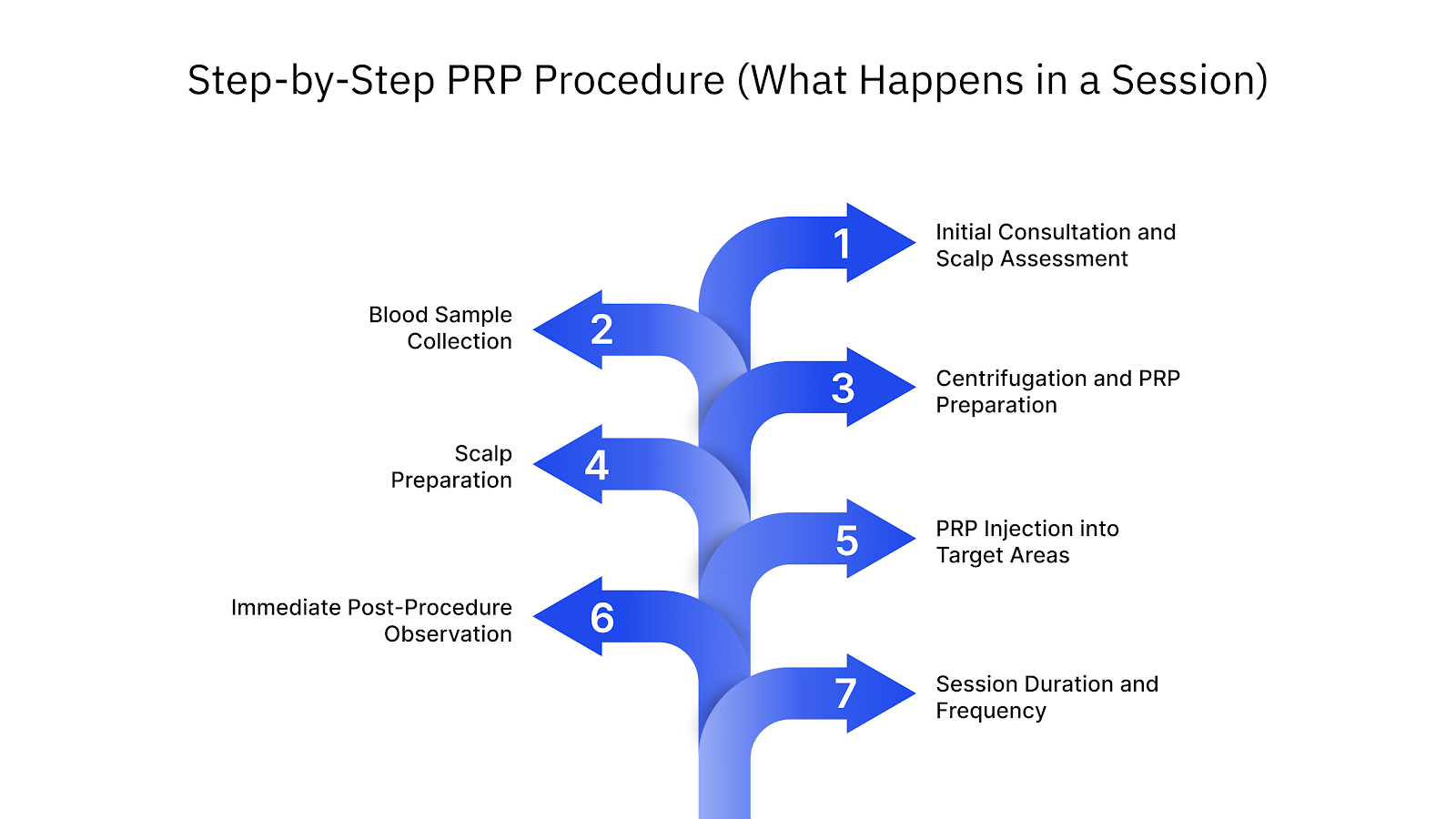
A PRP hair treatment session follows a structured medical process designed to ensure safety, accuracy, and consistency. While individual protocols may vary slightly based on assessment, the core steps remain largely the same.
1. Initial Consultation and Scalp Assessment
Before the procedure begins, your hair loss pattern, scalp condition, and medical history are reviewed. This assessment helps determine whether PRP is appropriate, which areas require treatment, and how sessions should be planned. Baseline photographs may be taken to track progress over time.
2. Blood Sample Collection
A small amount of blood is drawn from your arm, similar to a routine blood test. This step is usually quick and performed under sterile conditions to minimise discomfort and reduce infection risk.
3. Centrifugation and PRP Preparation
The collected blood sample is placed in a centrifuge, where it is spun at controlled speeds to separate platelet-rich plasma from other blood components. This process concentrates platelets and growth factors that are used during the treatment.
4. Scalp Preparation
The scalp is cleaned thoroughly before injections begin. In some cases, a topical numbing agent may be applied to improve comfort, depending on individual sensitivity and treatment area.
5. PRP Injection into Target Areas
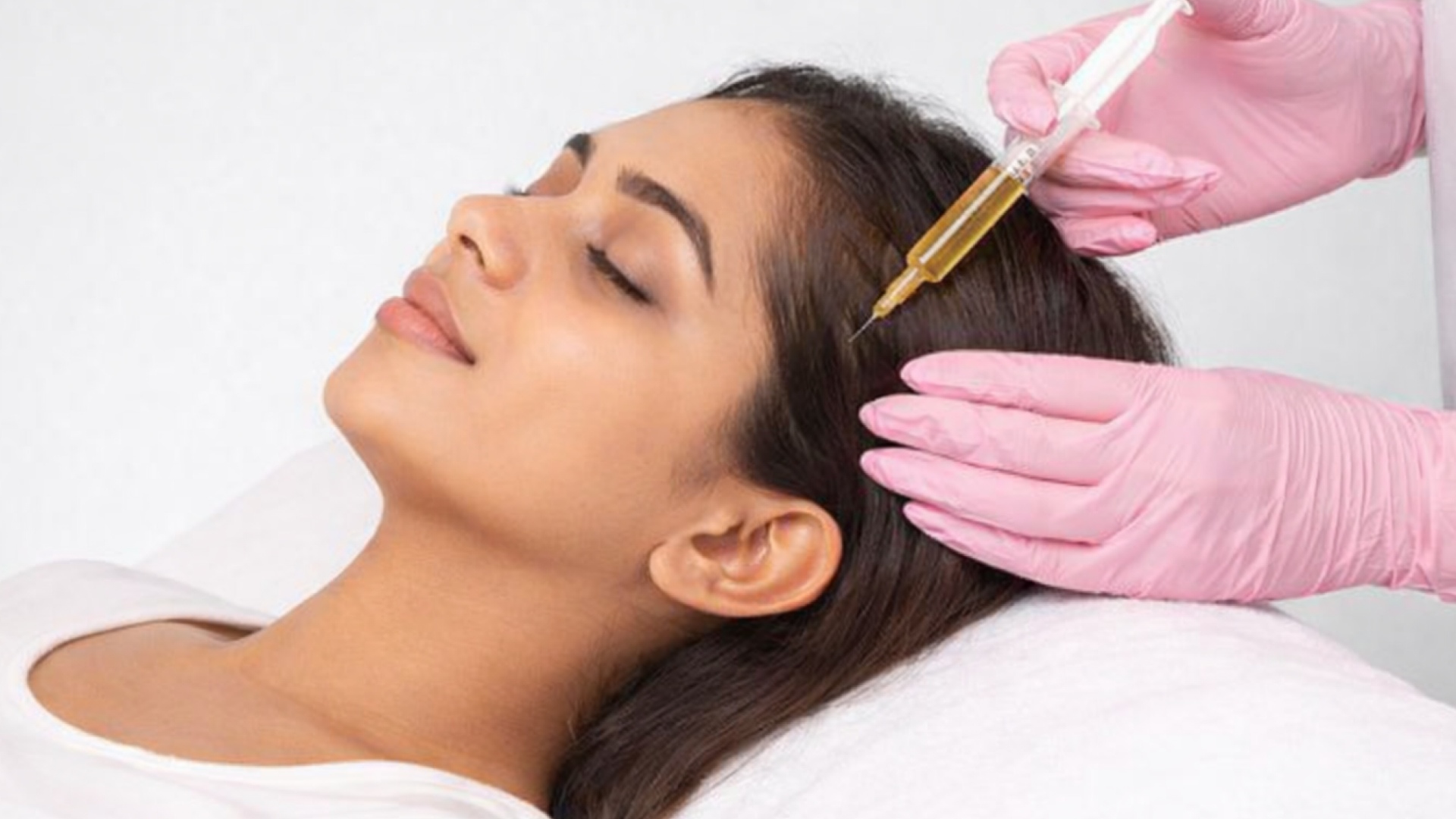
The prepared platelet-rich plasma is injected into specific areas of the scalp where hair thinning or reduced density has been identified. The injections are placed at measured depths to support existing hair follicles rather than superficial skin layers.
6. Immediate Post-Procedure Observation
After the injections, the scalp is checked for any immediate reactions such as redness or swelling. Most individuals are able to resume normal daily activities shortly after the session.
7. Session Duration and Frequency
A typical PRP session usually takes between 45 and 60 minutes from start to finish. PRP therapy is generally planned as a series of sessions spaced over several weeks or months, rather than a single treatment.
With the procedure explained, the next consideration is identifying appropriate PRP treatment options and providers in Padur, Chennai.
Recommended: Dermatologist Treatments for Hair Loss and Diagnosis.
How to Choose the Right PRP Clinic in Padur (Practical Checklist)
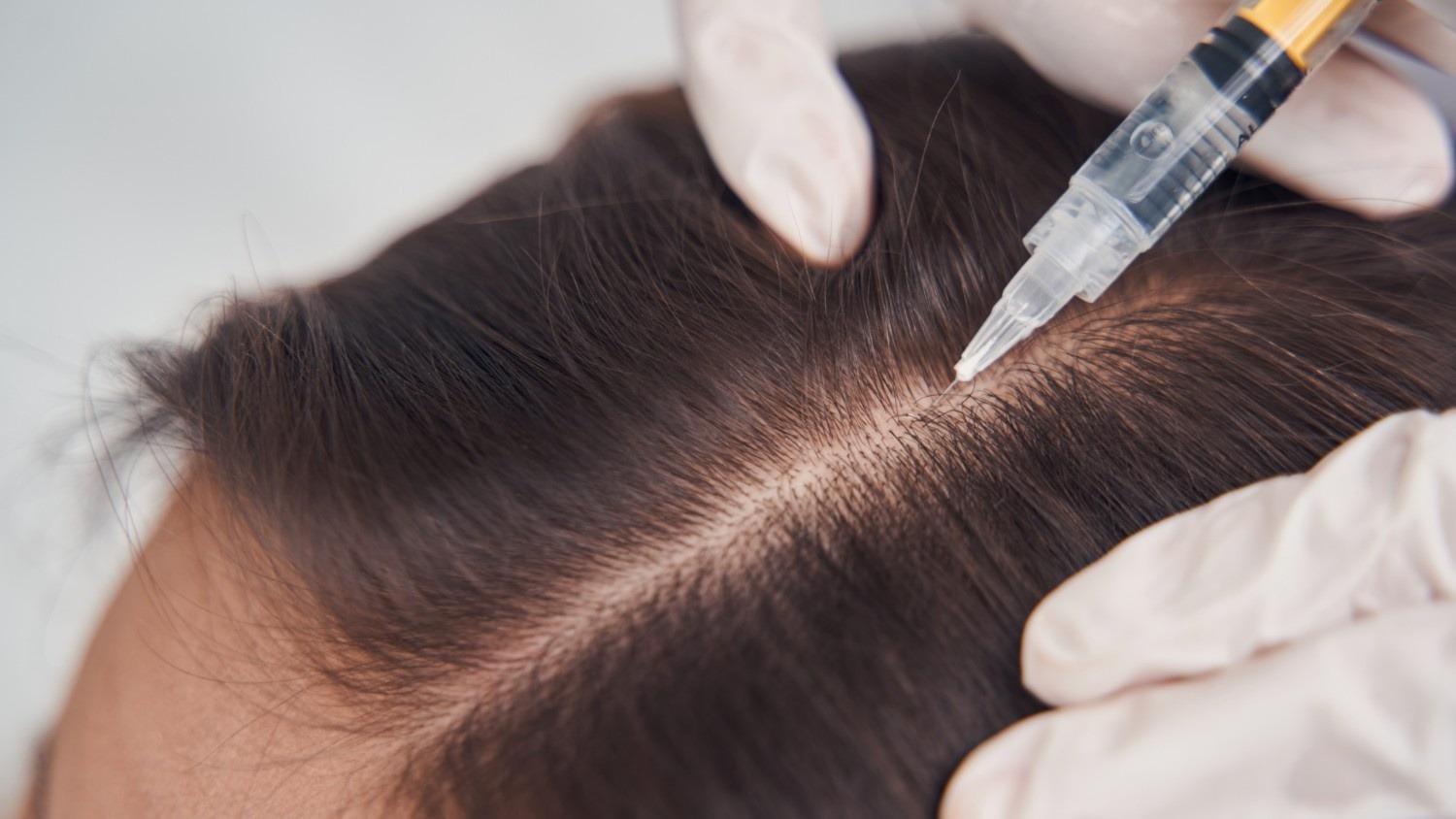
Choosing a PRP clinic requires careful consideration, as the success of treatment depends on proper diagnosis, planning, and follow-up rather than the procedure alone.
- Clinical Assessment Before Treatment: The clinic should begin with a detailed scalp and medical evaluation instead of recommending PRP immediately. Understanding the cause and stage of hair loss is essential for appropriate treatment selection.
- Clear Diagnosis and Case Selection: PRP should only be advised after determining if your hair follicles are still active and likely to respond. Clinics that skip diagnosis may not be offering personalized care.
- Who Performs the Procedure: It is important to confirm who conducts the consultation and who administers the PRP injections. Medical oversight and consistency in care contribute to safer treatment delivery.
- Structured Treatment Planning: A suitable clinic will outline the number of sessions, spacing between treatments, and review points. Be cautious of fixed packages offered without individual planning.
- Realistic Outcome Counselling: The clinic should explain that PRP results develop gradually and vary between individuals. Guaranteed results or instant improvement claims are a warning sign.
- Hygiene and Safety Standards: Proper sterile techniques, equipment handling, and infection control measures should be followed throughout the procedure. Transparency around safety practices is important.
- PRP Preparation Process: Ask how platelet-rich plasma is prepared and whether standard medical equipment is used. Proper preparation affects both safety and treatment quality.
- Follow-Up and Progress Monitoring: Ongoing follow-up allows the clinic to assess response and adjust treatment if needed. Progress is commonly tracked using photographs or scalp assessments.
- Transparent Costs and Communication: Consultation fees, session costs, and treatment frequency should be clearly explained. You should feel informed without being pressured to decide immediately.
Conclusion
PRP hair treatment can be a useful option for managing hair thinning when it is chosen for the right reasons and at the right stage. Its effectiveness depends on accurate diagnosis, careful planning, and consistency rather than a single session or quick expectations. Understanding what PRP can support, where its limitations lie, and how it fits into a broader hair care plan helps you make informed decisions.
If you are exploring PRP treatment in Padur, Chennai, prioritising a clinic that focuses on medical assessment, transparent communication, and structured follow-up can make a meaningful difference to your experience. A thoughtful approach allows PRP to be used responsibly, with outcomes assessed over time rather than promised upfront.
If you would like to understand whether PRP is suitable for your hair loss pattern, you can consider booking a consultation at Velantis Dermatology to discuss your concerns with Dr. Janani Sree C M and receive guidance based on clinical evaluation rather than assumptions.
FAQs
1. How painful is PRP hair treatment?
PRP hair treatment is generally well-tolerated. You may feel mild discomfort or a pricking sensation during injections, which varies depending on individual sensitivity. Any soreness usually settles within a short period.
2. How many PRP sessions are usually required?
PRP is typically planned as a series of sessions rather than a single treatment. The number of sessions depends on the cause and stage of hair loss, scalp condition, and individual response, which are assessed during consultation.
3. When can I wash my hair after PRP treatment?
Most clinics advise waiting at least 24 hours before washing your hair after PRP treatment. Specific aftercare instructions may vary, so it is important to follow the guidance provided during your consultation.
4. PRP work for genetic hair loss?
PRP may help support hair follicles in early to moderate genetic hair loss when follicles are still active. It does not reverse genetics or restore hair in long-standing bald areas, and results vary between individuals.
5. Are there any side effects of PRP hair treatment?
Common side effects are usually mild and temporary and may include redness, tenderness, or slight swelling at the injection sites. Serious complications are uncommon when PRP is performed under proper medical supervision.

.png)
.jpg)
.jpg)